Creative Indoor Play for Cold Winter Days
Creative Indoor Play for Cold Winter Days
Why Indoor Play Matters in Winter
When the weather turns chilly, families often spend more time indoors—but that doesn’t have to mean boredom or endless screen time. With a little creativity and structure, indoor play can be cozy, meaningful, and full of learning. Cold days offer a perfect opportunity to slow down, reconnect, and invite imagination into everyday spaces.
For young children, indoor play isn’t just about entertainment—it’s about building emotional resilience, practicing cooperation, nurturing creativity, and feeling safe when the world outside seems a little too cold. Winter can become a season of warmth from the inside out.


Setting Up Cozy Play Spaces
To spark imagination, create simple and inviting spaces:
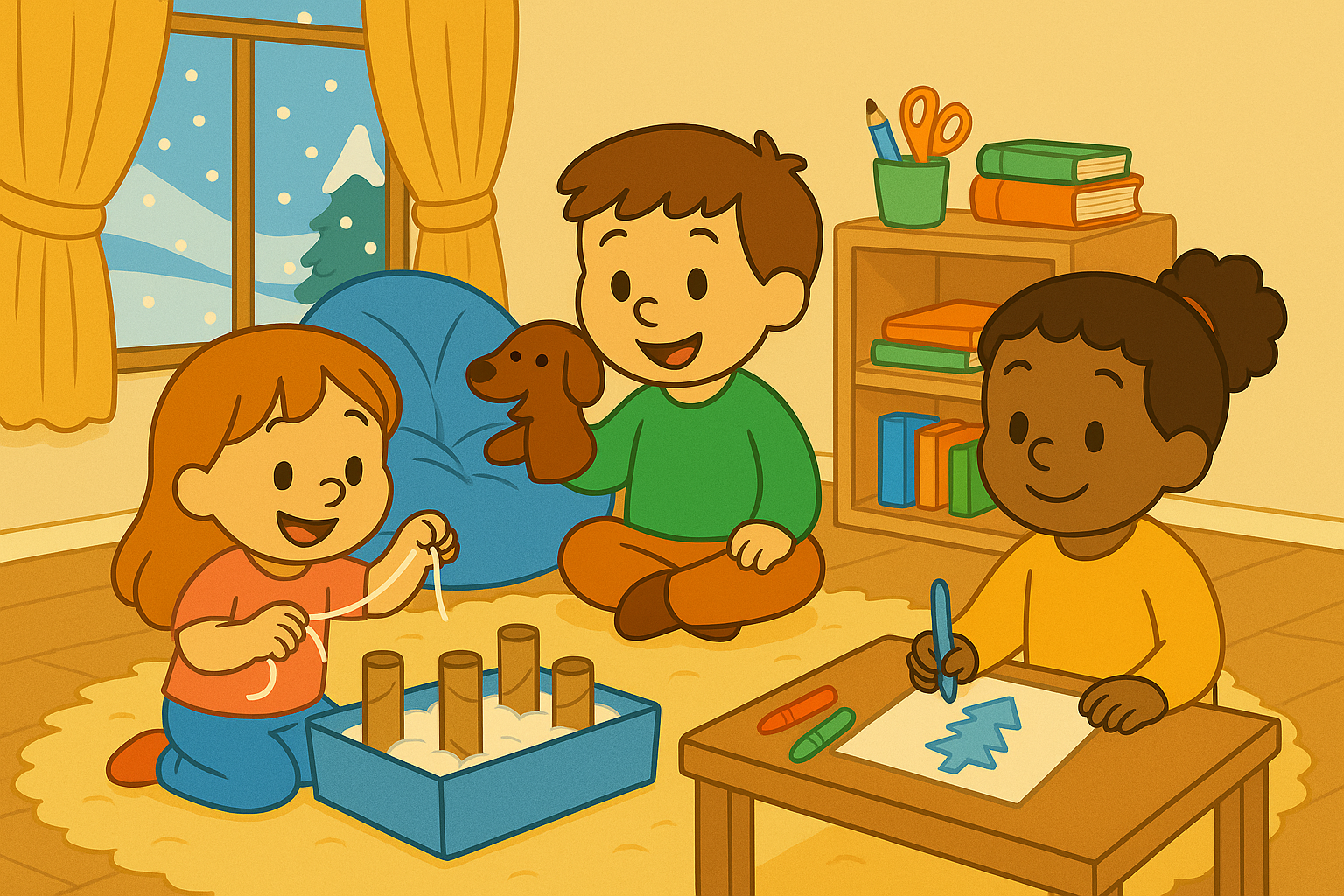
A reading nook with pillows and string lights
A “construction zone” with blocks and cardboard
A kitchen play space with real utensils
An art corner with paper and recycled materials
A sensory bin using grains, beans, or fabric pieces
These don’t need to be fancy or permanent. A blanket over a chair turns into a cave. A cardboard box becomes a rocket ship. A flashlight makes stars appear on the ceiling.
Puppets, Pretend Play & Storytelling
Pretend play is powerful—even more so in winter when kids may feel cooped up. Puppets and role-play allow children to safely explore feelings, leadership, and imagination:
Put on a puppet show about bravery or kindness
Create character voices together
Make puppets ask questions about the day
Act out stories from favorite books
Let kids “direct” scenes with their own ideas
You could even use prompts from Puppet Storytime: Tales of Generosity and Giving to inspire themes rooted in kindness and cooperation.
Sensory Play That Sparks Curiosity
Sensory activities soothe children during long indoor days. Try:
Homemade playdough with winter scents (cinnamon, vanilla)
A “snow bin” using cotton balls or rice
Washing toy animals with warm soapy water
Ice cubes with food coloring in muffin tins
Feelings sorting with different textures (smooth, rough, cold, soft)
Sensory play helps children regulate their bodies and emotions—an especially valuable skill during restless winter days.
Movement Games for Small Spaces
Staying indoors doesn’t have to mean being still. Try creating movement challenges:
Indoor scavenger hunts
“Snowflake freeze dance”
Tape lines on the floor for balance games
Gentle yoga or stretching for kids
Obstacle courses using pillows and blankets
Movement protects mood and supports focus. For more emotional resilience through rhythm, you’ll find gentle strategies in How to Handle Holiday Overstimulation in Young Kids.
Art Projects That Warm the Room
Art gives children permission to express what’s inside:
Paint with ice (colored water frozen in cubes)
Draw winter scenes from imagination
Create “wish jars” with tiny notes inside
Build sculptures from cardboard scraps
Make paper lanterns or stained “glass” windows
Displaying their art around the room helps kids feel proud and grounded—especially when the outdoors feels distant.
Learning Through Play
Winter play doesn’t have to replace learning—it can become learning. Try:
Measuring ingredients for baking
Puzzle-building challenges
Matching socks from the laundry
“Little librarian” games with book sorting
Play money and store pretend scenarios
Projects like these build problem-solving skills and practical life confidence—similar to the hands-on experiences found in Baking Traditions That Teach Math and Cooperation.
Mindful and Calming Activities
Winter days can also invite rest and reflection. Gentle options include:
Guided breathing with bubbles or feathers
Drawing feelings inside a simple heart shape
Listening to soft music and identifying instruments
Journaling together in picture or word form
Reading poetry or simple affirmations by candlelight
Quiet moments keep the mood steady. They also teach children that calm can be comforting—not boring.
Including the Whole Family
Indoor play grows when more people join in. Try:
A family game challenge night
Collaborative storytelling
Shared cooking or crafting projects
Reading circle with turns choosing books
Building a giant fort or castle together
When siblings or caregivers participate, indoor play becomes more than activity—it becomes connection. For more ideas that bring families together, see Cozy Winter Reading Nooks for Family Storytime.
Helping Kids Feel in Control
Some children resist indoor time because they feel stuck. Providing choice changes that:
“Do you want the art station or the puppet station today?”
“Which music fits our play today?”
“Should we build a rocket ship or a castle?”
“Who gets to choose the next story prompt?”
When children participate in decision-making, their mood often shifts from restless to engaged.
Winter Play as a Season of Growth
There may be snow and wind outside—but inside, children can grow roots of imagination, confidence, and creativity. Winter doesn’t limit play—it transforms it. Slowness becomes opportunity. Quiet becomes invitation. Indoors becomes a world waiting to be explored.
And at the center of it all is this gentle message: Joy doesn’t depend on weather. Sometimes it simply needs a small space, a warm heart, and imagination ready to move.
This content is for educational purposes and is not a substitute for professional medical or psychological advice.