Family Holiday Photo Booth Ideas at Home
Family Holiday Photo Booth Ideas at Home
Why a Home Photo Booth Creates Meaningful Holiday Memories
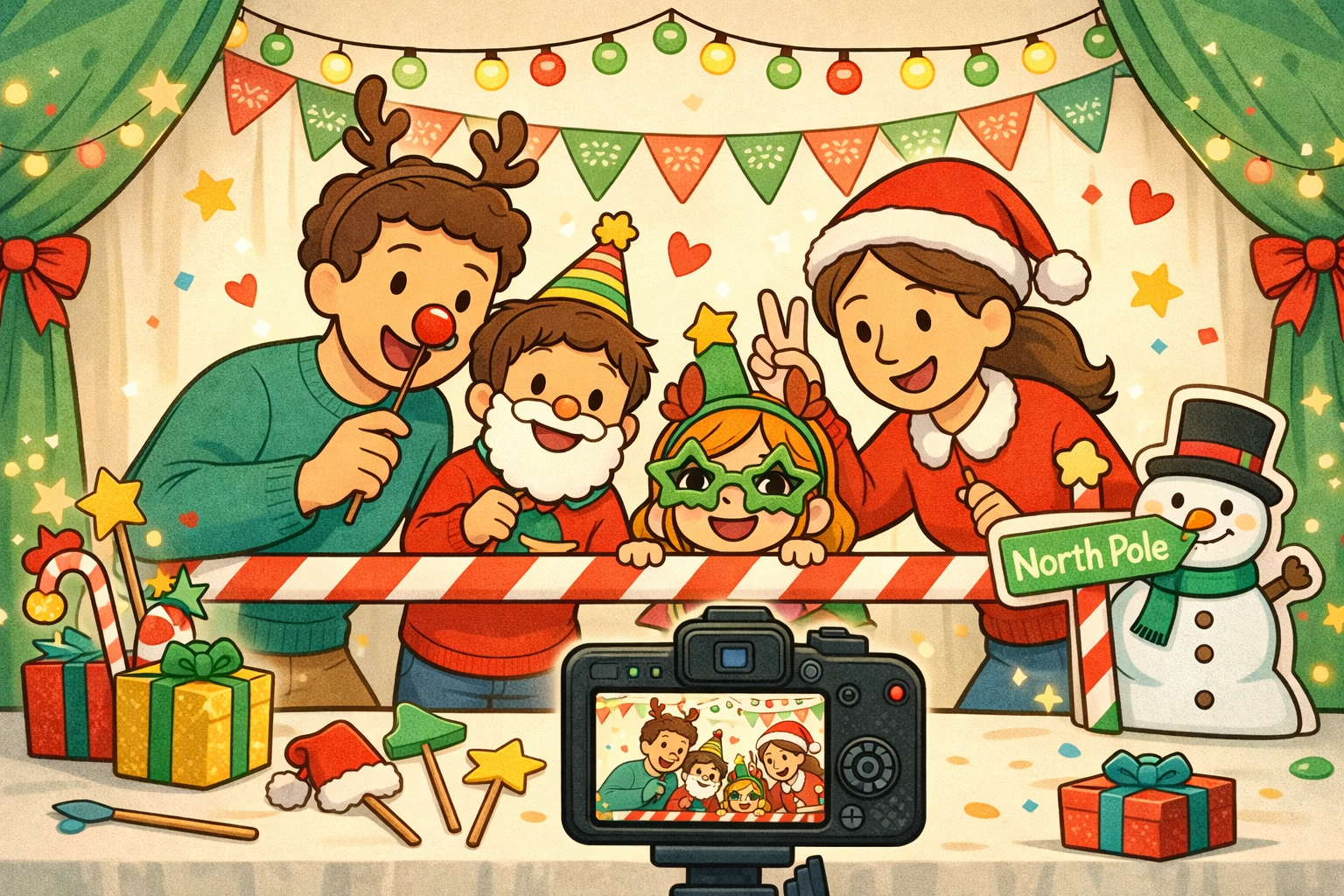
Holiday photos often capture how families look — but a home photo booth captures how families feel. When kids are invited into a playful, pressure-free photo space at home, the focus shifts from perfect smiles to genuine connection. Laughter replaces stiffness. Curiosity replaces performance. And moments become memories rather than obligations.
A family photo booth works because it meets kids where they are. It gives them permission to be silly, expressive, creative, and fully themselves. Over time, these photo moments become visual reminders of warmth, togetherness, and shared joy — not just what everyone wore or where they stood.


The Emotional Benefits of Playful Family Photos
Children often feel nervous or resistant during traditional photo-taking. A home photo booth transforms the experience into play, reducing pressure and increasing emotional safety.
Benefits include:
Encouraging self-expression
Building confidence through choice and creativity
Strengthening sibling bonds through shared laughter
Creating positive associations with family traditions
Helping kids feel seen and accepted as they are
This playful approach reflects the same emotional grounding found in Celebrating Winter Holidays Without Overwhelm, where reducing pressure allows families to stay connected and present.
Choosing the Right Space for Your Home Photo Booth
Your photo booth doesn’t need a dedicated room or elaborate setup. The best spaces are simple, comfortable, and easy to reset.
Great options include:
A blank wall or curtain
A corner of the living room
In front of a couch or bench
A hallway with good natural light
A cleared space near a window
What matters most is that kids feel relaxed and curious, not rushed. Keeping the setup consistent year after year helps children feel familiar and excited when the booth reappears.
Simple Backdrop Ideas That Set the Mood
Backdrops create atmosphere without overwhelming the scene. Simple is almost always better — especially for young children.
Easy backdrop ideas:
Solid-colored sheets or fabric
Kraft paper taped to the wall
A seasonal garland or banner
Paper snowflakes, hearts, leaves, or stars
Fabric scarves layered softly
Reusable felt shapes
Choose colors and textures that feel calm and inviting rather than busy. The backdrop should support the moment, not distract from it.
Props That Encourage Play, Not Performance
Props invite imagination and movement, helping kids loosen up naturally. Focus on items that encourage expression rather than posing.
Prop ideas:
Paper crowns or hats
Scarves and simple capes
Cardboard frames
Felt hearts, stars, or seasonal icons
Puppets or stuffed animals
Handmade signs with symbols (no words needed)
Puppets are especially effective for kids who feel shy. This playful confidence-building mirrors the character-led expression explored in Puppet Games for Seasonal Learning, where imagination helps children engage comfortably.
Theme Ideas for Different Holidays and Seasons
Themes give structure without limiting creativity. You can rotate themes throughout the year or let kids help choose.
Examples:
Winter holidays: Cozy sweaters, stars, lanterns, snow friends
Valentine’s Day: Hearts, kindness symbols, shared hugs
Spring celebrations: Flowers, rainbows, butterflies
Fall holidays: Leaves, pumpkins, friendly creatures
Birthdays: Favorite colors, simple crowns, celebratory poses
Let children interpret themes in their own way. Some may jump, some may cuddle, some may strike dramatic poses — all of it is valid and meaningful.
Making the Photo Booth Kid-Led
The most joyful photo booth moments happen when children feel in control. Invite them to make choices and lead the experience.
Ways to encourage leadership:
Let kids choose props
Allow them to decide when the photo is taken
Invite them to direct family poses
Let siblings take turns as the “photographer”
Encourage movement instead of stillness
This sense of agency supports confidence and emotional expression, much like the child-led reflection encouraged in How to Celebrate Small Wins Year-Round, where kids learn to recognize and celebrate moments on their own terms.
Keeping the Experience Calm and Pressure-Free
The goal of a home photo booth is connection — not perfection. Some kids may only want a few photos. Others may jump in and out repeatedly. Both are okay.
To keep things calm:
Avoid time pressure
Skip “say cheese” prompts
Don’t correct poses or expressions
Take breaks as needed
End while energy is still positive
A short, joyful session is always better than pushing for more.
Including Parents Without Stealing the Spotlight
Parents play an important role in modeling ease and enjoyment. When adults relax, kids follow.
Try:
Sitting at kid level
Letting kids initiate hugs or poses
Laughing at silly moments
Following your child’s lead
Showing warmth rather than directing
Parents being present — rather than managing the moment — aligns with the mindful presence encouraged in Mindful Celebrations for Parents Too, where adults allow themselves to enjoy the experience instead of orchestrating it.
Turning Photo Booths Into a Family Tradition
When repeated year after year, photo booths become emotional landmarks in family history.
Ideas to build tradition:
Use the same spot every year
Bring back favorite props
Create a photo booth box for storage
Let kids notice how they’ve grown
Compare poses from previous years
These traditions give children a sense of continuity and belonging. They also create visual stories families love revisiting together.
Preserving the Memories in Meaningful Ways
Photos don’t have to live only on phones. Bringing them into daily life reinforces their emotional value.
Try:
Printing a small yearly photo book
Creating a rotating photo wall
Adding photos to a family journal
Making seasonal photo cards
Letting kids choose their favorite image
When children see themselves represented joyfully, authentically, and without pressure, it strengthens their sense of self and connection to family life.
This content is for educational purposes and is not a substitute for professional medical or psychological advice.