Puppet Games for Seasonal Learning
Puppet Games for Seasonal Learning
Why Puppet Games Make Seasonal Learning More Meaningful
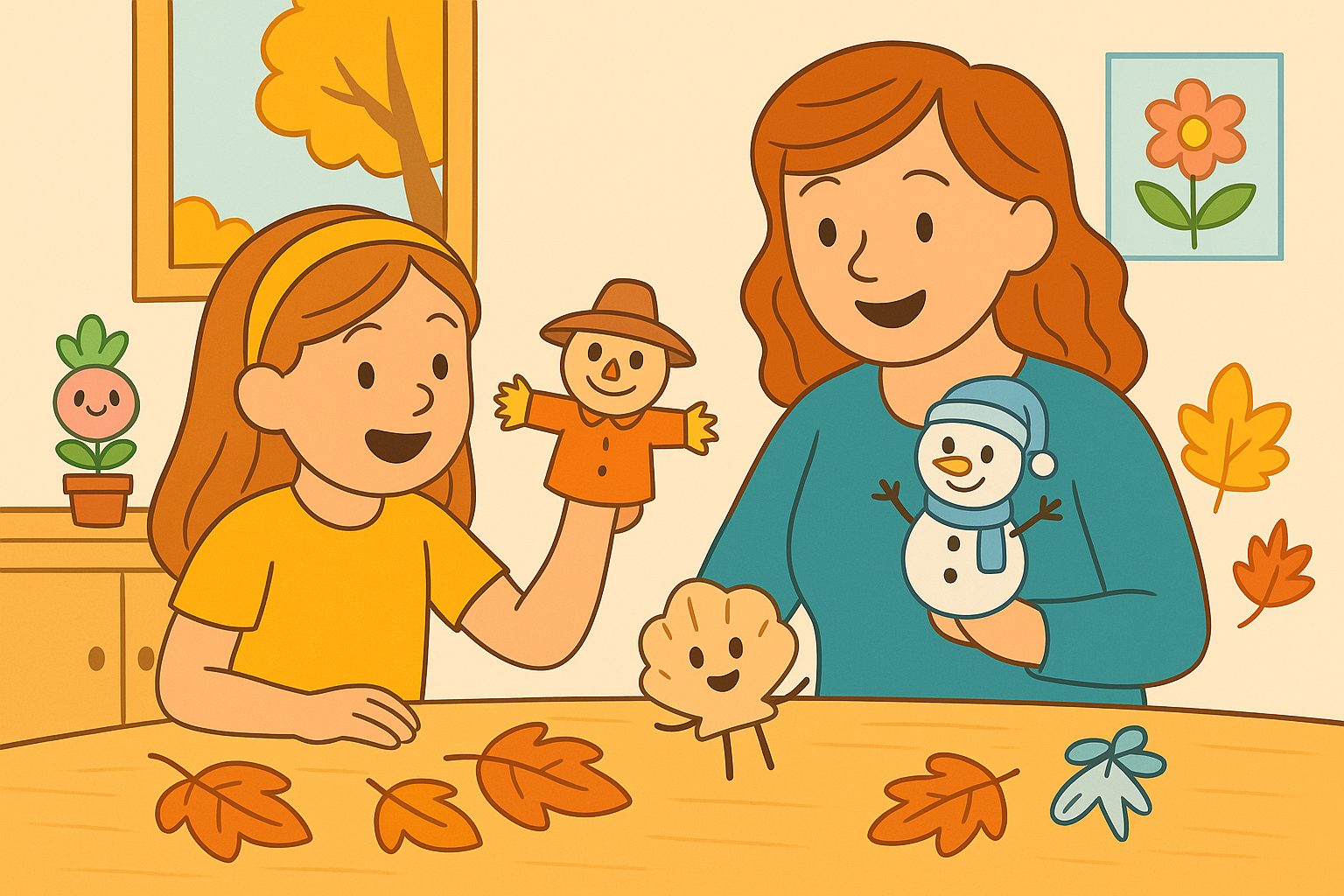
Puppets have a special way of pulling children into a story, a lesson, or a moment. They feel alive, expressive, and full of possibility — which makes them perfect companions for seasonal learning. Whether families are exploring winter traditions, spring discoveries, summer adventures, or fall celebrations, puppets help kids connect emotionally with the changing seasons in a way that feels playful and natural.
Seasonal learning becomes more than a concept. It becomes a character-driven experience where puppets ask questions, share feelings, introduce challenges, and help kids explore new ideas. Families can use puppets to build excitement for upcoming holidays, ease transitions between seasons, and make learning more interactive at home. These simple games often evolve into traditions kids look forward to year after year.


The Developmental Power of Puppetry in Early Learning
Puppet games strengthen a wide range of developmental skills — all while feeling like pure fun to kids. As children play with puppets, they practice:
Emotional expression
Conversation skills and turn-taking
Storytelling and imaginative thinking
Seasonal vocabulary
Social-emotional reflection
Problem-solving through characters
Self-regulation
Puppets also give kids a layer of emotional protection. They can express worries, hopes, and excitement through a character rather than speaking directly about themselves. This mirrors the gentle emotional exploration seen in Puppet Skits That Teach the Spirit of the Holidays, where puppets help children navigate big ideas in a safe, playful way.
Creating a Seasonal Puppet Collection
Families don’t need many puppets to start seasonal learning — but having a small, rotating collection builds excitement and structure. You can make puppets yourself or mix in store-bought ones.
Ideas for each season:
Fall
Leaf fairy
Harvest mouse
Friendly scarecrow
Owl or squirrel puppet
Winter
Snow friend
Candle or lantern puppet
Gnome or holiday helper
Arctic animals
Spring
Flower puppet
Bunny or chick
Rain cloud or sunshine character
Garden gnome
Summer
Seashell friend
Beach animal
Ice cream character
Butterfly or firefly puppet
You can store each set in a labeled bin or box. Kids love opening the seasonal bin as if it were a surprise gift filled with stories waiting to be told.
Setting Up a Cozy Space for Puppet Play
The environment plays a big role in how engaging puppet games feel. A small corner or table setup helps children focus and dive deeper into the experience.
Include:
A comfortable mat or blanket
A small basket of puppets
Props that match the season (leaves, shells, snowflakes, flowers)
Soft lighting or seasonal décor
A few open-ended materials like scarves, blocks, or felt shapes
Creating a warm, inviting space echoes the cozy setup described in Creating a Cozy Family Mood Night in Winter, where atmosphere plays a strong role in deepening the emotional connection.
Puppet Game #1: Seasonal Story Starters
Puppets can introduce simple prompts that inspire imaginative seasonal storytelling.
How it works:
A puppet “pops up” and gives a short prompt, like:
“Guess what I found in the fall forest today?”
“Something magical melted in the winter snow…”
“A spring creature needs our help!”
“Let’s go on a summer adventure!”
Children add details, continue the story, or act out the next scene.
This game builds creativity, sequencing, and language skills while keeping the mood light and playful.
Puppet Game #2: Seasonal Hide-and-Seek Clues
In this game, a puppet hides a seasonal object and gives gentle clues.
Steps:
Hide an item (a felt leaf, snowflake, flower, or star).
The puppet gives clues like:
“I’m feeling warm… warmer… colder!”
“Look near something green!”
“My winter treasure is icy cold and hiding low!”
Kids follow the clues until they find the object and celebrate with the puppet. This boosts observation skills, problem-solving, and excitement around seasonal shifts.
Puppet Game #3: Emotion of the Season
Seasons often come with emotional tones — coziness, excitement, calmness, curiosity — and puppets can help children explore these feelings.
Try:
Ask the puppet to describe how the season makes them feel.
Invite the child to help the puppet name its emotions.
Let kids comfort the puppet or celebrate with it.
Explore feelings tied to seasonal transitions (like starting school or holiday excitement).
This mirrors the reflective emotional work seen in Family Gratitude Walks and Reflections, helping kids connect internal experiences with the changing world around them.
Puppet Game #4: Seasonal Learning Challenges
This game lets puppets present simple tasks that spark curiosity and hands-on discovery.
Examples:
“Can you help me sort leaves by color?”
“I found winter animals — can you match them to their tracks?”
“These spring flowers need help finding their shapes!”
“Let’s build a summer sandcastle for my friend Crab!”
Children respond naturally to character-led challenges, making learning feel like play.
Puppet Game #5: Holiday Helpers
Puppets make wonderful helpers for introducing upcoming holidays or seasonal celebrations.
You can use them to:
Explain traditions
Introduce new vocabulary
Model kindness during holidays
Role-play holiday routines
Explore cultural celebrations
For example, a puppet might say:
“I need help making decorations!”
“Can you teach me how we celebrate this holiday?”
“I found a holiday problem — can we solve it together?”
This hands-on learning approach pairs beautifully with the craft-rich creativity explored in Holiday-Themed Puppet Craft Ideas, allowing kids to build meaning through play.
Puppet Game #6: Seasonal Movement Play
Movement-based puppet games help children express seasonal energy in active, imaginative ways.
Try:
Fall: “Dance like falling leaves.”
Winter: “Glide like ice skaters.”
Spring: “Hop like baby rabbits.”
Summer: “Shimmer like fireflies.”
Puppets act as enthusiastic movement coaches, encouraging kids to explore body awareness and rhythm through seasonal themes.
How Seasonal Puppet Games Become Family Traditions
When seasonal puppet games become part of your family’s rhythm, they transform ordinary moments into playful rituals filled with connection and imagination. Children begin associating each season with stories, characters, and joyful learning moments — a pattern they remember long after childhood.
Over time, families may:
Build a seasonal puppet library
Repeat favorite games year after year
Create holiday puppet shows
Photograph puppets in seasonal settings
Craft new puppets to mark each season
These traditions deepen a child’s connection to the natural world while nurturing creativity, emotional expression, and family connection. Puppet games become a warm thread woven through the year, helping kids welcome each season with curiosity, comfort, and joy.
This content is for educational purposes and is not a substitute for professional medical or psychological advice.