How to Teach the Value of Giving Without Gifts
How to Teach the Value of Giving Without Gifts
Why Giving Without Gifts Matters in Today’s World
In a world where giving is often tied to buying, wrapping, and exchanging physical items, teaching children the deeper meaning of generosity is more important than ever. When kids learn that giving can be expressed through time, kindness, creativity, or helpfulness, they understand that generosity is not limited by money or material things. Instead, it becomes a mindset — one that strengthens relationships and builds emotional resilience.
Giving without gifts invites children to focus on connection rather than consumption. It helps them see that meaningful gestures don’t need to be expensive or complicated. In many ways, this kind of giving is more authentic because it’s rooted in empathy, mindfulness, and intentional care. Families who embrace non-material giving often find their home feels more peaceful and connected year-round.


How Children Naturally Learn Generosity
Kids learn generosity through modeling, repetition, and opportunities to practice it. When parents consistently demonstrate kindness, children begin to imitate it in organic, joyful ways. Generosity grows through the small everyday acts — sharing snacks, comforting a sibling, helping carry groceries, or noticing when someone needs support.
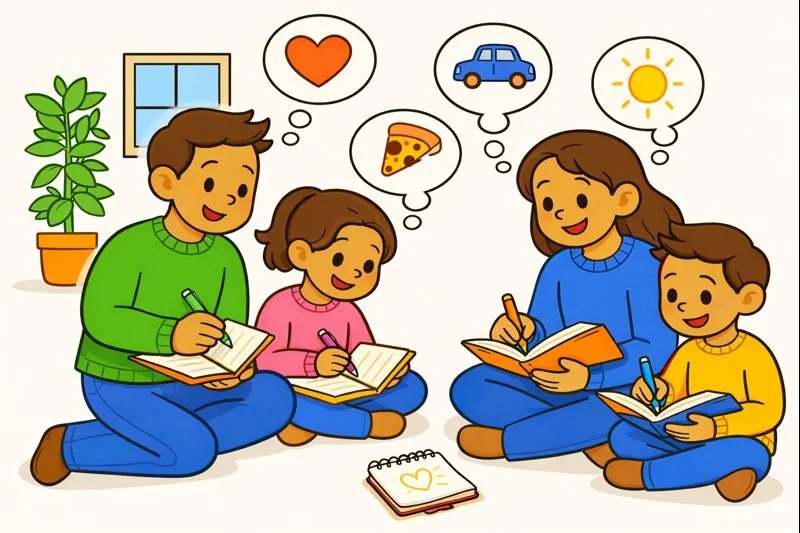
This approach aligns with the emotional modeling seen in Family Gratitude Circles During Dinner, where reflection and connection help children develop empathy. When kids experience generosity not as a lesson but as a family culture, they internalize it deeply.
The goal is to show children that giving comes from the heart, not the store.
Exploring What “Giving” Really Means With Kids
Families can begin by reframing the idea of giving. Instead of equating gifts with objects, explore giving as a wider expression of care.
Kinds of giving children can understand:
Time: playing with a younger sibling or helping a friend
Helpfulness: doing a chore without being asked
Kind words: offering encouragement or gratitude
Presence: sitting with someone who feels sad or lonely
Creativity: drawing a picture, singing a song, or performing a puppet show
Skill-sharing: teaching someone something new
These types of giving help children see themselves as capable contributors to family life, friendships, and their communities.
Teaching Generosity Through Family Rituals
Rituals help children practice generosity regularly, not just during holidays. These routines build emotional habits that last a lifetime.
Try incorporating:
A weekly “helping moment”
A monthly family volunteer project
Nightly affirmations or kind messages
Gratitude sharing after dinner
Taking turns choosing a person to appreciate
These rituals gently guide children toward compassionate behavior in a predictable, supportive structure. Family rituals excel at reinforcing the emotional rhythms also highlighted in Family Gratitude Walks and Reflections, where small, repeated actions deepen connection.
Storytelling as a Tool for Teaching Non-Material Giving
Stories help children relate to characters who give through kindness, courage, curiosity, and creativity rather than gifts. Puppets, books, and imaginative play all offer entry points for conversations.
Try:
Puppet skits about helping a friend
Reading stories where characters solve problems through generosity
Telling family stories of times when someone showed kindness
Making up bedtime stories about magical acts of giving
This approach mirrors the playful learning explored in Puppet Games for Seasonal Learning, where characters guide children through emotional exploration. Storytelling makes abstract concepts feel real and actionable.
Encouraging Children to Notice Opportunities to Give
Teaching kids to be generous begins with helping them see opportunities. Make noticing part of your family culture.
Invite children to observe:
Who looks sad or tired
Who needs help
Who is left out
Who did something kind today
Who might enjoy a surprise message or drawing
Turning children into “kindness detectives” builds empathy and strengthens social awareness. Over time, noticing becomes second nature.
Practicing Giving Through Acts of Service
Acts of service help children understand that giving is often about doing, not buying. These actions show kids that they can make a meaningful difference in their family or community with their time and energy.
Simple family-friendly examples:
Helping cook dinner
Bringing in neighbors’ mail
Reading to a younger sibling
Collecting trash at a park
Making cards for community helpers
Helping grandparents with small tasks
These experiences build confidence and remind children that they have something valuable to offer.
Teaching Emotional Giving: Kindness, Comfort, and Presence
Some of the most powerful forms of giving don’t involve action at all — they involve emotional connection. Teaching kids how to offer emotional support helps them develop strong relational skills.
Examples of emotional giving:
Sitting with someone who’s upset
Listening without interrupting
Offering a hug or a hand squeeze
Sharing calming strategies
Using kind words during conflict
These skills are especially impactful during busy seasons, as explored in Celebrating Winter Holidays Without Overwhelm, where emotional presence helps create a peaceful environment for children and adults.
Teaching Creativity as a Form of Giving
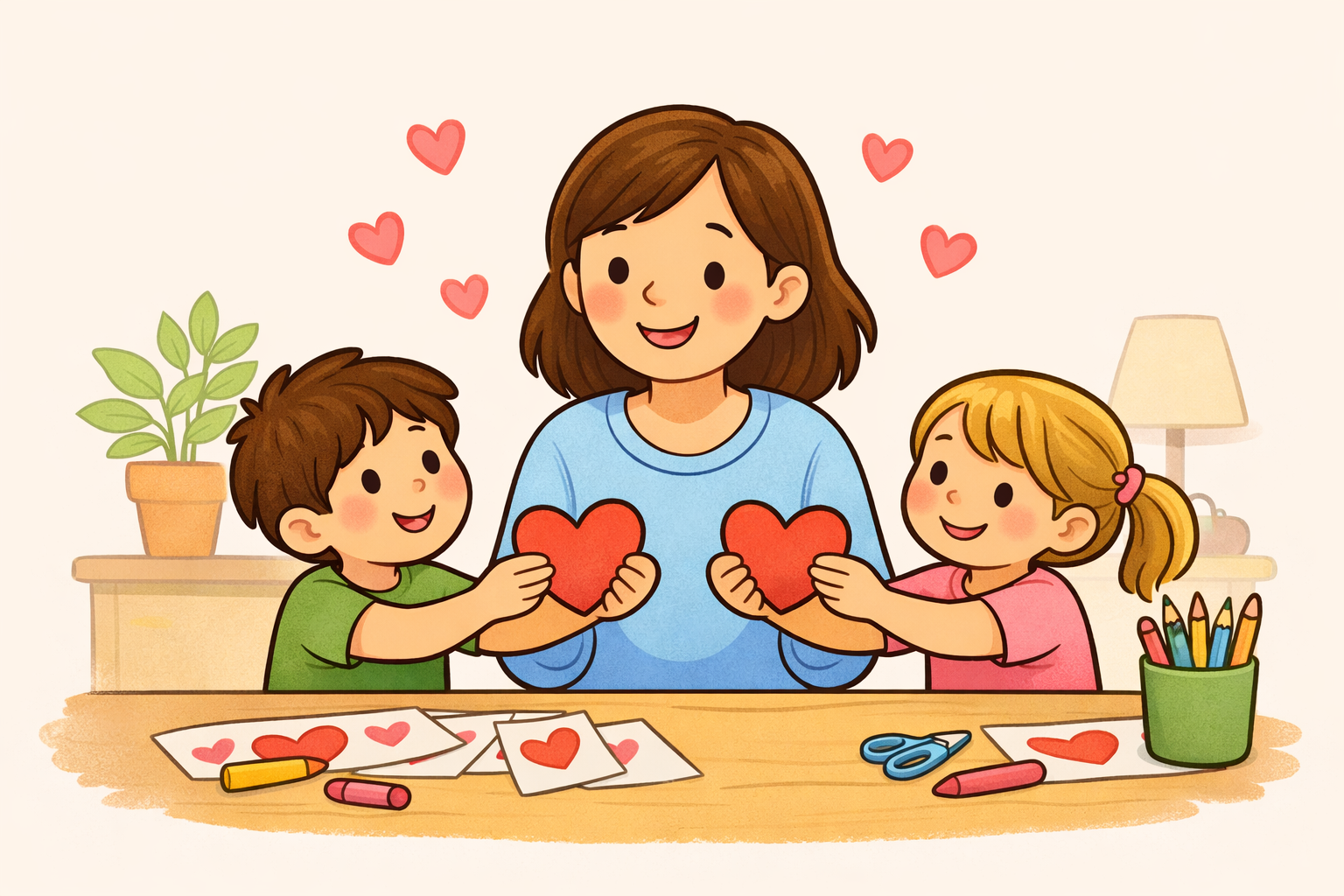
Creative gifts show children that giving comes from their imagination, not a store shelf. Kids often find joy in creating something meaningful and personal.
Creative giving ideas:
Handmade cards
Drawings or paintings
Puppet performances
Songs or poems
Simple crafts
Decorated notes of encouragement
A “kindness coupon” book with acts they can offer
Creativity helps children express themselves in authentic, emotionally rich ways.
Building a Family Culture Where Giving Is Celebrated
When families prioritize non-material giving, children quickly understand that generosity is valued. Celebrate acts of giving by acknowledging them warmly and specifically.
You might say:
“I saw how you helped your friend. That was thoughtful.”
“You noticed Grandma needed help. That shows empathy.”
“Your drawing made your sister smile — you gave her joy.”
Recognizing acts of giving reinforces a child’s identity as someone who brings kindness into the world.
The goal is not praise for praise’s sake — it’s helping children internalize a sense of purpose and pride in their contributions.
Raising Children Who Give From the Heart
When kids learn that giving has nothing to do with buying, they develop a compassionate worldview that lasts into adulthood. They begin to see themselves as capable helpers, thoughtful friends, and empathetic community members.
Over time, children who practice giving without gifts:
Build stronger relationships
Develop emotional resilience
Feel a deeper sense of belonging
Become more confident in their ability to make a difference
Experience joy in kindness rather than material reward
Families who nurture non-material giving create a home filled with warmth, connection, and shared purpose.
This content is for educational purposes and is not a substitute for professional medical or psychological advice.