Helping Kids Understand Seasons Through Play
Helping Kids Understand Seasons Through Play
Why Seasons Make Such Powerful Learning Tools
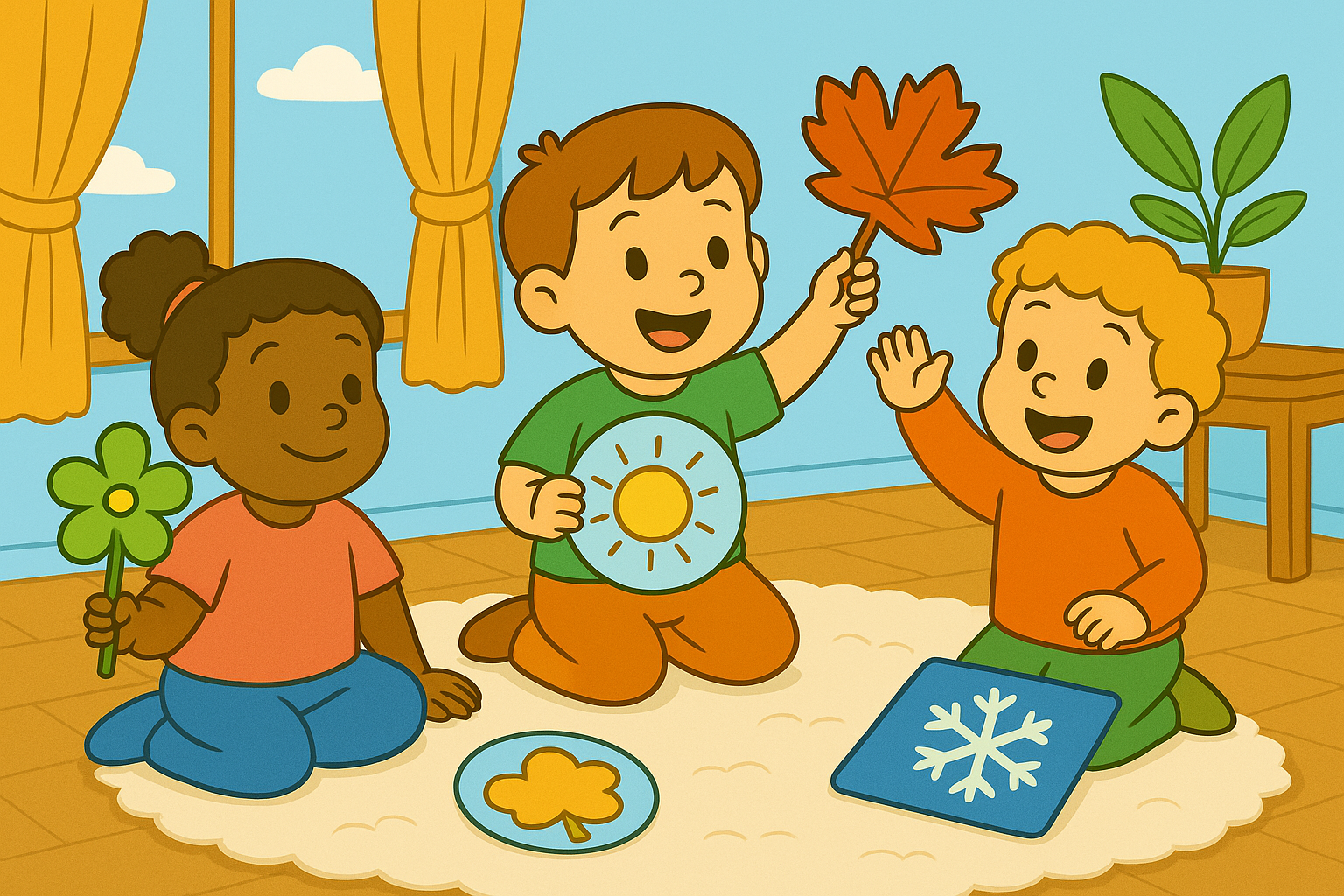
Young children learn best through direct experience, sensory exploration, and imagination. Seasons naturally offer all three. Each season brings new colors, textures, temperatures, routines, and emotional tones—perfect ingredients for hands-on learning. When children explore these changes through play, they begin forming an internal map of how the world shifts over time.
Season-based play also helps kids feel grounded. Knowing that things change in predictable cycles builds confidence, resilience, and comfort with transitions. With a little creativity, families can turn everyday seasonal moments into invitations to explore, question, wonder, and imagine.


Creating a Seasonal Play Space at Home
You don’t need to transform your home—just designate a small corner where seasonal items rotate throughout the year:
A basket for nature treasures
A shelf for sensory items
A spot for seasonal books
A rotating seasonal backdrop or poster
A tray for themed crafts or loose parts
This space helps children visually and physically experience change in a safe, predictable way—similar to how seasonal puppet setups work in DIY Seasonal Puppet Theater Themes.
Spring Play Invitations – Curiosity & Growth
Spring is filled with movement and discovery. Try play activities that highlight new beginnings:
Sorting seeds or beans by size
Pretending to plant felt “garden patches”
Water play to show how things grow
Pretend baby animals made from pom-poms
Rainy-day experiments with droppers and sponges
Emphasize themes like trying again, gentle bravery, and noticing tiny details. Spring play supports children as they learn that growth happens slowly—and beautifully.
Summer Play Invitations – Warmth & Exploration
Summer play is energetic, bright, and full of sensory richness. Indoors or outdoors, kids can explore:
Shell and stone sensory trays
Playdough “ice cream shops”
Freeze-and-melt experiments
Ocean small-world play with blue fabric
Shadow play using flashlights and paper shapes
Summer is perfect for movement-based play that celebrates confidence and curiosity—similar to the playful energy found in Family Movie Traditions for Each Season, where summer media themes highlight adventure and exploration.
Fall Play Invitations – Change & Reflection
Fall invites children to understand transition in gentle ways. Create cozy, reflective play scenes:
Leaf-sorting by color or size
Acorn counting or patterning
Pretend forest animal storytelling
Wind experiments with fans and scarves
Harvest pretend play with baskets and felt vegetables
Fall helps children learn that change is part of life—and that shifting rhythms can feel comforting, not scary. These themes pair well with the emotional lessons from Fall Nature Walks: Teaching Change Through Seasons.
Winter Play Invitations – Rest & Connection
Winter brings calm, quiet, and introspection. Offer winter play that reflects those qualities:
Cotton “snow” sensory bins
Ice discovery trays
Pretend hibernation caves for toy animals
Star-themed crafts or shadow scenes
Warm water play with gentle music
Winter is a season of togetherness. Encourage play that highlights cooperation, comfort, and imagination—similar to the gentle rhythms explored in How to Avoid Holiday Burnout as a Family.
Using Puppets to Teach Seasonal Feelings
Puppets provide the perfect bridge between seasons and emotions. Try seasonal puppet story prompts:
“The little leaf is afraid to fall—what happens next?”
“The snowflake feels lonely—who will it meet?”
“The flower needs help growing—what will the rain cloud say?”
“The summer sun is tired—who will help it rest?”
Puppets allow children to explore feelings safely, especially when seasonal changes feel big or confusing.
Sensory Play: The Heart of Seasonal Learning
Sensory experiences don’t just help kids understand seasons—they help them feel them:
Cold rice becomes “snow”
Warm water becomes “summer sunshine”
Crunchy leaves become fall sounds
Soft moss becomes spring forest floors
Each sensation supports emotional regulation while teaching environmental awareness. Sensory experiences also help children anchor memories around the seasons.
Movement-Based Seasonal Learning
Children understand time and change through their bodies. Try:
“Blooming flower” yoga poses
“Blowing wind” scarf dances
“Hibernation freeze” games
“Jumping waves” over blue mats
Movement helps kids express energy in ways that match seasonal rhythms, giving them language for how seasons feel in their bodies.
Using Books, Music, and Stories
Enhance seasonal learning with:
Books about weather or nature
Seasonal songs or rhythms
Family storytelling about past seasonal memories
Dramatic play inspired by stories
When children hear narratives tied to seasons, they understand that time has flow, cycles, and meaning.
Making Seasons Part of Family Identity
Create small traditions that celebrate seasonal change:
A “first leaf” walk in the fall
A “welcome winter” lantern night
A springtime growing project
A summer evening storytelling ritual
These rituals help children feel connected to the earth, to time, and to each other. They also anchor the year with gentle predictability—something young children need to feel safe.
This content is for educational purposes and is not a substitute for professional medical or psychological advice.