Puppet Shows That Celebrate Acts of Kindness
Puppet Shows That Celebrate Acts of Kindness
Why Puppets Are Powerful for Teaching Kindness
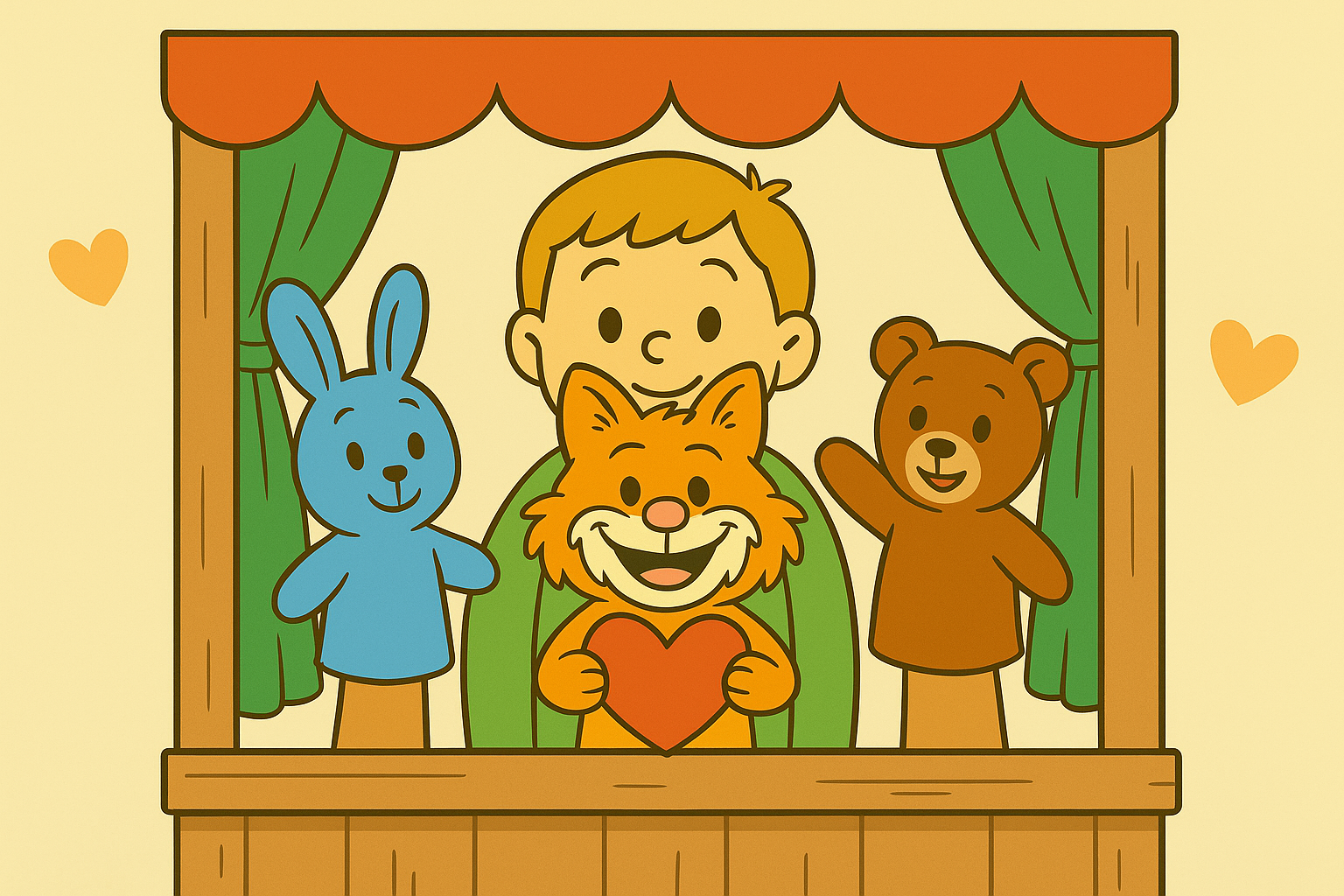
Children naturally understand the world through stories and characters. Puppets give them a safe and playful way to explore emotions, relationships, and choices—especially around kindness. When children act out characters helping one another, apologizing, sharing, or supporting a friend, they don’t just watch the story—they practice it.
Using puppets to celebrate acts of kindness makes values feel alive. It turns “be kind” from a rule into a skill, and it allows children to rehearse empathy in a joyful and imaginative way. Puppet shows help kindness become visible, repeatable, and easy to imitate.


Creating a Kindness Theme for Each Show
To give the puppet show direction, choose one simple theme such as:
Helping someone who is nervous or shy
Noticing when a friend is left out
Saying sorry and trying again
Sharing when it’s difficult
Cheering up someone who’s sad
Giving encouragement before a challenge
These topics make emotional learning concrete. A simple story arc gives children a path to follow—even when their imagination takes the lead.
Choosing Characters That Represent Feelings
Puppets can be animals, objects, hand-drawn faces, or pieces of fabric with eyes. What matters most is personality. Give each one a clear feeling:
A shy bunny
A worried squirrel
A brave fox
A sleepy bear
A lonely turtle
A helpful cat
Children quickly understand feelings through characters—and begin to connect those feelings to real-life experiences. This process mirrors narrative approaches found in Helping Kids Handle Gift Disappointment Gracefully, where emotion becomes story—not judgment.
Simple Story Structures Kids Can Use
You can guide children with a basic storytelling pattern:
Beginning:
Introduce the characters. Something feels off or someone needs help.
Middle:
Puppet friends try solutions. Some work, some don’t.
Kindness Moment:
Someone acts with compassion, listening, or bravery.
Ending:
Characters find comfort, connection, or a plan forward.
This structure builds recognition: kindness creates change.
Play Invitations to Spark Kind Puppet Shows
You can set up storytelling stations to spark imagination:
A small box theater or curtain
Paper houses or trees
Felt hearts to place near puppets when kindness happens
Stamp cards for “acts of kindness”
Stick puppets with blank facial expressions to draw feelings
These setups don’t require explanation—just gentle invitation. For more seasonal play setups, Crafting Seasonal Play Invitations (Spring, Summer, Fall, Winter) provides helpful inspiration.
Encouraging Kind Dialogue
Children often need language models to express kindness. Try prompts like:
“Do you need help?”
“I noticed you were quiet—are you okay?”
“I can share mine with you.”
“I made a mistake, but I want to try again.”
“You look worried—want to talk about it?”
Puppets can give children words before they’re ready to use them alone.
Using Music and Movement
Adding playful rhythm helps children express emotions:
Soft music when someone feels sad
Quick drumbeats when a character needs help
A celebration song when kindness appears
Slow puppet movement for reflection
Lively dancing when connection is restored
Music helps children understand emotional pacing—without needing long explanations.
Reflecting After the Show
After performing, children don’t need critique—they need reflection:
“Was there a kind moment?”
“What helped the character feel better?”
“What could we try in real life?”
“Which puppet acted bravely?”
“Was any part difficult?”
These questions aren’t meant to “teach a lesson.” They simply open space to feel and notice.
Creating a “Kindness Collection”
Each puppet show can add to a growing family tradition. Try saving:
Photos of characters
Puppet scripts or drawings
Lists of kind words used
A “heart stamp” for each demonstration of empathy
Voice recordings of puppet moments
Over time, children will have evidence of their own emotional growth—similar to ideas in Family Photography Traditions Through the Seasons, where memories become tools for reflection and storytelling.
When Kids Don’t Want to Talk About Feelings
Sometimes puppets help children express what they cannot yet explain. If they resist emotional conversations, let the puppets speak:
“What would your puppet say?”
“Do they need help?”
“Can another puppet tell them how they feel?”
This approach provides safety. The puppet carries the emotion—until the child is ready to carry it themselves.
Why Kindness Stories Stay With Children
When kindness is acted out—not just described—children feel its power. Puppet shows turn values into experiences, and experiences into memories. Long after the story ends, children will remember that a puppet’s kindness changed everything—and that they can do the same in real life.
Because kindness isn’t just something we learn. It’s something we practice. And puppets make practice joyful.
This content is for educational purposes and is not a substitute for professional medical or psychological advice.