The Role of Technology in Developing Empathy
The Role of Technology in Developing Empathy
Why Empathy Still Matters in a Digital World
As technology becomes more integrated into daily life, many parents worry that screens might dull children’s ability to connect, care, or understand others. Empathy — the ability to recognize and respond to another person’s feelings — can feel fragile in fast, digital environments.
But empathy isn’t automatically lost when screens enter the picture. Like any skill, it develops through experience, modeling, and guidance. Technology can either distance children from others or expose them to new perspectives — depending on how it’s used.
The question isn’t whether technology belongs in childhood. It’s whether it’s being used in ways that keep humanity at the center.


How Empathy Develops in Children
Empathy grows gradually. Young children first learn to recognize emotions, then begin to understand that others have feelings separate from their own. Over time, they learn to respond with care, concern, and perspective.
Empathy development typically includes:
Recognizing emotions in others
Understanding why someone might feel that way
Responding with kindness or curiosity
Technology doesn’t change these stages — but it can influence how often children practice them.
Technology as a Window Into Other Lives
One powerful way technology can support empathy is by exposing children to experiences beyond their immediate world. Stories, videos, and conversations can introduce perspectives children might never encounter otherwise.
Through media, kids can:
See how other families live
Learn about different cultures and traditions
Hear voices and experiences unlike their own
When children are guided through these experiences, technology becomes a bridge — not a barrier — to understanding others.
How Stories Build Emotional Understanding
Stories are one of the most effective tools for building empathy. Whether told through books, shows, or digital media, stories invite children to step into someone else’s shoes.
Empathy-rich stories often:
Show characters experiencing emotions clearly
Explore motivations behind actions
Highlight consequences and repair
These storytelling principles connect closely with Teaching Emotional Awareness Through Media Characters, where characters help children safely explore feelings and reactions.
Shared Media Experiences Strengthen Empathy
Empathy grows faster when media is shared. Watching or listening together allows adults to guide attention toward emotions, choices, and perspectives.
Shared experiences help children:
Notice emotional cues they might miss alone
Ask questions about characters’ feelings
Practice perspective-taking through conversation
These moments align naturally with Family Movie Nights That Spark Conversations (Not Just Screen Time), where shared viewing becomes a space for reflection and connection.
Social Technology and Empathy Skills
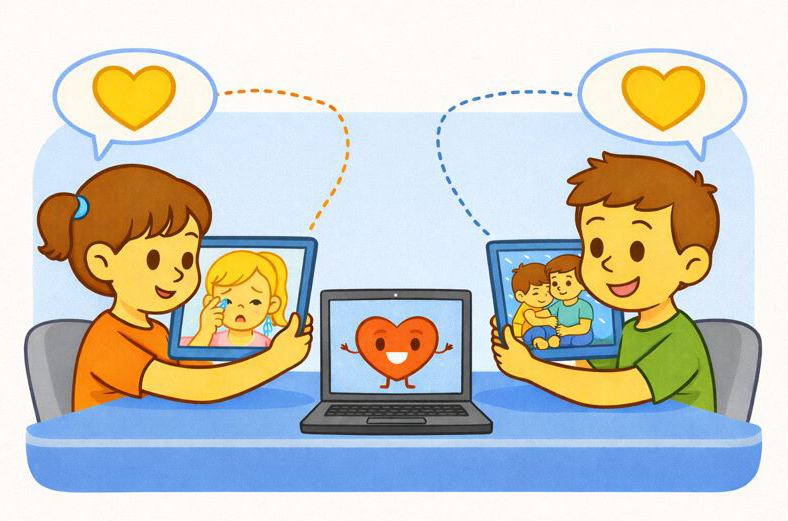
As kids grow, technology increasingly becomes social — messaging, multiplayer games, shared platforms. These spaces offer both opportunities and challenges for empathy.
With guidance, kids can learn to:
Read tone and intent in digital communication
Recognize how words affect others
Practice kindness even without face-to-face cues
These skills are closely related to ideas in Social Skills in a Screened World: Helping Kids Stay Empathic, where digital interaction becomes a place to practice — not lose — empathy.
When Technology Can Undermine Empathy
Technology doesn’t always support empathy automatically. Certain patterns can make emotional understanding harder if left unchecked.
Empathy can weaken when:
Content moves too fast to process emotions
Interactions are anonymous or dehumanized
Screens replace real-world connection entirely
These moments aren’t failures — they’re signals to rebalance how technology is being used.
Teaching Empathy Through Digital Mistakes
One of the most valuable empathy lessons comes from mistakes — especially online. Misunderstandings, hurt feelings, or conflicts offer real opportunities for growth.
Parents can support learning by:
Helping kids reflect on what others might have felt
Encouraging repair and accountability
Avoiding shame-based responses
These responses help kids understand that empathy isn’t about perfection — it’s about awareness and repair.
Modeling Empathy in Digital Spaces
Children learn empathy not just from what adults say, but from what they do — especially online.
Empathy modeling includes:
Speaking respectfully about others online
Pausing before reacting digitally
Showing curiosity instead of judgment
This modeling reinforces lessons from Raising Digital Citizens: Teaching Online Safety and Kindness, where values guide behavior across digital spaces.
Balancing Digital and Real-World Empathy Practice
Technology can support empathy, but it shouldn’t replace real-world practice. Face-to-face interaction still plays a critical role in reading expressions, tone, and body language.
A healthy balance includes:
Offline time for cooperative play
Real conversations about feelings
Digital experiences that complement — not replace — connection
This balance helps empathy stay flexible and grounded.
Using Technology to Strengthen, Not Replace, Humanity
Empathy doesn’t disappear in a digital world — it evolves. Technology changes how children encounter others, but it doesn’t change their need for connection, understanding, and care.
Families who intentionally guide tech use often notice:
More thoughtful conversations
Greater awareness of others’ feelings
Increased kindness in digital interactions
Stronger emotional confidence
Empathy isn’t lost in the digital age. It’s taught, practiced, and strengthened — one thoughtful interaction at a time.
This content is for educational purposes and is not a substitute for professional medical or psychological advice.