Creative Family Countdown Activities
Creative Family Countdown Activities
Why Countdowns Create Anticipation Without Pressure
Countdowns tap into a child’s natural sense of time and anticipation. When done thoughtfully, they help kids understand “what’s next” without feeling rushed or overwhelmed. Instead of repeatedly asking when something will happen, children can see progress unfolding in small, manageable steps.
Creative family countdowns are not about urgency or productivity. They’re about making waiting feel meaningful. Whether you’re counting down to a holiday, a birthday, a visit, or a seasonal change, a gentle countdown offers structure, excitement, and emotional safety — especially for young children who struggle with abstract timelines.


The Emotional Benefits of Countdown Rituals for Kids
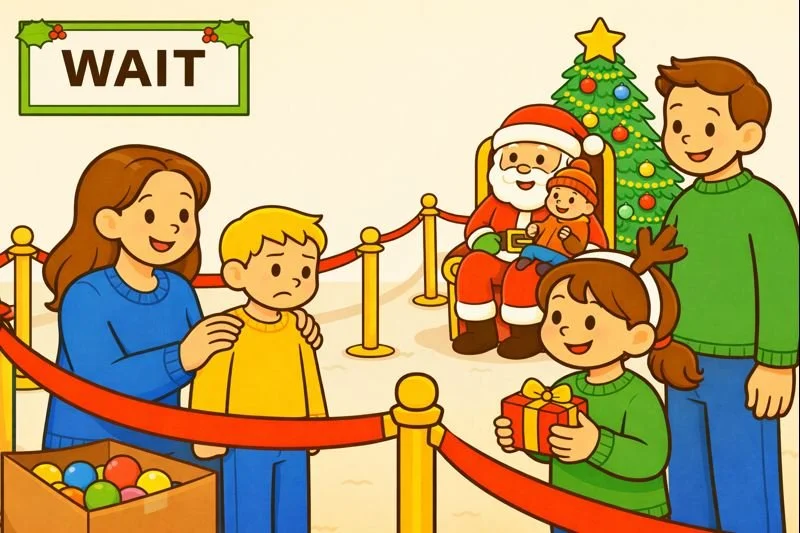
Children often experience big emotions around waiting: excitement, impatience, anxiety, or disappointment. Countdown activities help regulate these feelings by making time visible and predictable.
Benefits include:
Reduced anxiety around upcoming events
Improved patience and emotional regulation
A sense of control and participation
Opportunities for daily connection
Practice with transitions and change
These benefits align closely with the reflective calm families build through Family Gratitude Circles During Dinner, where predictable rituals help children feel grounded and secure.
Choosing the Right Countdown for Your Family
Not all countdowns need to lead to major events. Some of the most meaningful ones are simple and recurring.
You might create countdowns for:
Holidays or birthdays
The start of a new season
A family trip or visit
The end of a school week
A special family day
A routine change or transition
The key is choosing something that feels positive and appropriate for your child’s age and emotional readiness.
Simple Visual Countdown Ideas
Visual countdowns help children see time passing. These are especially helpful for preschoolers and early elementary kids.
Easy visual ideas:
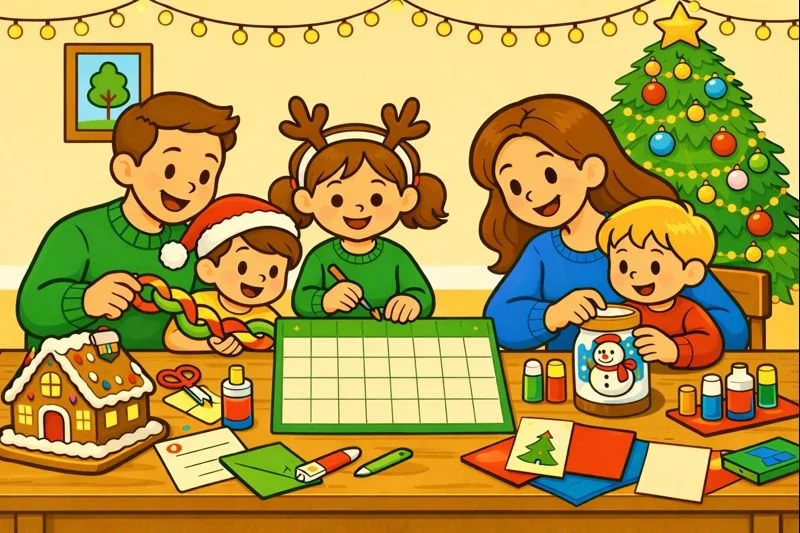
Paper chains with one link removed each day
A jar with one token added or removed daily
Sticky notes on a calendar
A countdown wheel with turning sections
A row of numbered envelopes
Visual tools don’t need to be elaborate. In fact, simpler designs often work best because they’re easy to understand and maintain.
Creative Countdown Activities That Involve Daily Connection
The most powerful countdowns include small daily moments of connection rather than just marking time.
Try:
A daily question or prompt (“What are you excited about today?”)
A short story added one piece at a time
A daily act of kindness
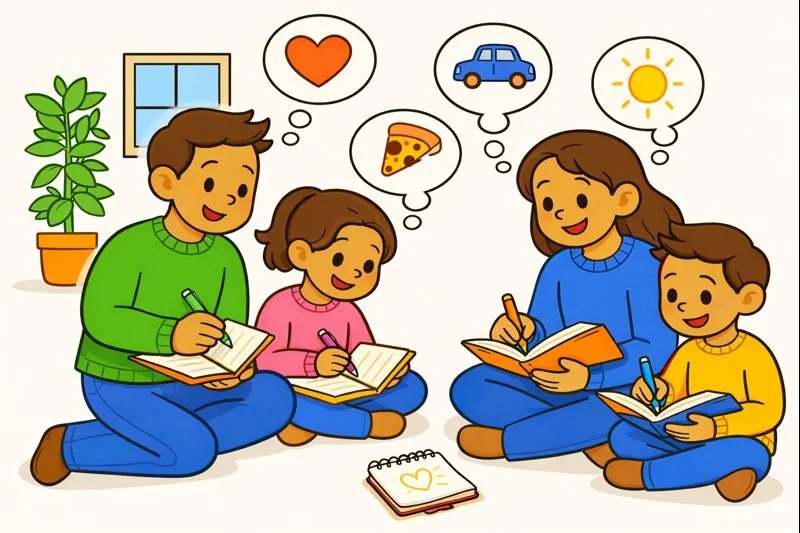
A shared reflection or gratitude moment
A tiny family challenge (draw something, move your body, help someone)
These activities turn countdowns into shared experiences, echoing the intentional togetherness found in How to Celebrate Small Wins Year-Round.
Countdown Calendars With Gentle Activities
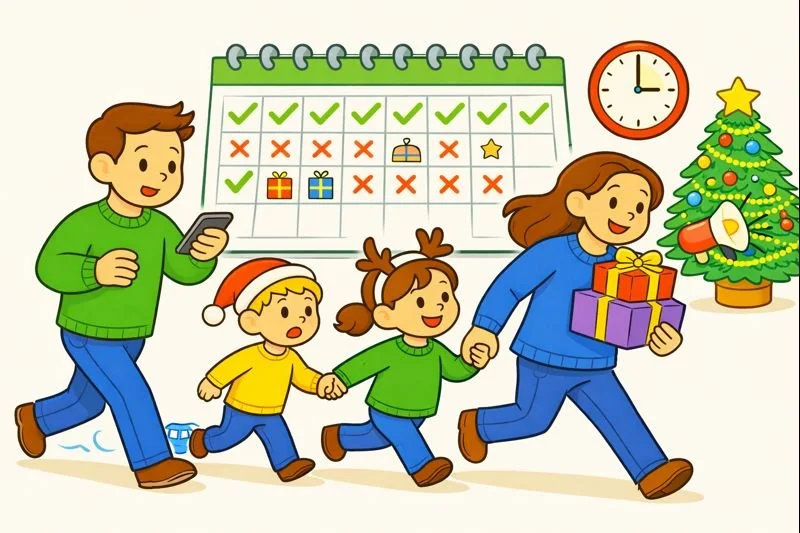
Instead of treats or prizes, many families enjoy countdown calendars that focus on experiences or emotions.
Examples of daily prompts:
“Do something kind for someone at home.”
“Share one thing you’re thankful for.”
“Create something together.”
“Spend five minutes being quiet.”
“Move your body in a fun way.”
These calendars build anticipation without overstimulation, helping children associate waiting with positive, calming rituals.
Using Countdowns to Support Transitions
Countdowns are especially helpful during transitions — starting school, welcoming a new sibling, preparing for travel, or adjusting routines.
For transitions, countdowns might include:
Talking through what to expect
Naming feelings about the change
Practicing new routines in small steps
Creating visual reminders of progress
This approach supports emotional readiness and mirrors the calm transition strategies families explore in Celebrating Winter Holidays Without Overwhelm.
Creative Art-Based Countdowns
Art-based countdowns invite creativity and self-expression, making the passage of time feel playful rather than passive.
Ideas include:
Drawing one picture each day that connects to the upcoming event
Coloring a section of a larger image daily
Creating a collage piece by piece
Adding a sticker or symbol each day
Building a paper mural over time
Art countdowns pair beautifully with reflective learning, similar to the creativity encouraged in Teaching Kids About Seasons Through Art, where children process change through expression.
Keeping Countdowns Calm and Flexible
While countdowns can be exciting, they should never become a source of pressure. Flexibility is essential.
To keep things calm:
Skip days if needed
Avoid rigid expectations
Keep activities optional
Let kids opt out sometimes
Focus on connection, not completion
If a countdown starts to feel stressful, it’s okay to pause or simplify. The goal is emotional support, not perfection.
Letting Kids Lead the Countdown
When children help design or lead countdown activities, they feel more invested and confident.
Ways to encourage leadership:
Let kids choose activities
Invite them to decorate the countdown
Allow them to decide when to mark the day
Let them explain the countdown to others
This autonomy builds confidence and mirrors the child-led reflection families practice in many mindfulness-based routines.
How Creative Countdowns Become Family Traditions
Over time, creative countdowns often become traditions children remember fondly. They mark time not just by days passing, but by shared moments, conversations, and feelings.
Families who use countdowns thoughtfully often notice:
Smoother transitions
Less anxiety around waiting
Stronger daily connection
Children who feel included and informed
More meaningful anticipation
Creative family countdowns teach children that waiting doesn’t have to feel empty or stressful. Instead, it can be filled with intention, imagination, and warmth — turning ordinary days into a meaningful journey toward what’s next.
This content is for educational purposes and is not a substitute for professional medical or psychological advice.