Teaching Kids About Seasons Through Art
Teaching Kids About Seasons Through Art
Why Art Is a Powerful Way to Teach Seasons
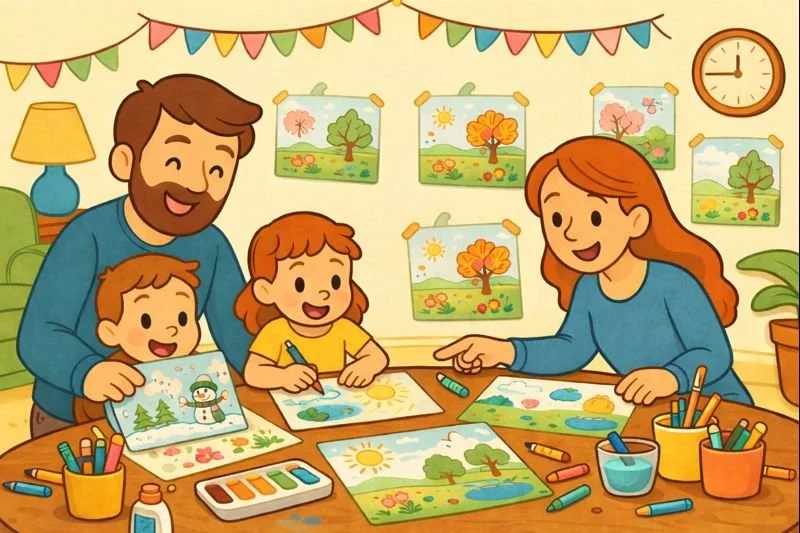
Children experience the seasons with their whole bodies — they feel the chill of winter air, the warmth of summer sun, the crunch of fall leaves, and the softness of spring rain. Art gives kids a way to process these sensory experiences visually and emotionally, turning abstract concepts like time and change into something concrete and meaningful.
When children create art inspired by the seasons, they aren’t just learning about weather or calendars. They’re learning how change works, how cycles repeat, and how the world evolves while still feeling familiar. Art invites curiosity without pressure, making seasonal learning joyful rather than instructional.


How Seasonal Art Supports Emotional and Cognitive Growth
Seasonal art activities support more than just creative skills. They help children build emotional awareness, observation skills, and a deeper connection to their environment.
Through seasonal art, kids practice:
Noticing details in the world around them
Expressing emotions connected to different times of year
Understanding change without fear
Developing patience and focus
Strengthening fine motor skills
Connecting feelings to visual expression
This gentle awareness mirrors the reflective learning encouraged in Family Gratitude Walks and Reflections, where children observe nature and talk about what they notice and feel.
Introducing Seasons Through Observation Before Art
Before jumping into art supplies, help children notice the season they’re in. Observation builds curiosity and makes art more meaningful.
Try inviting kids to observe:
Colors outside
How the air feels
Sounds they hear
Clothes people are wearing
Changes in plants or trees
How their bodies feel during the season
You can ask open-ended questions like:
“What colors do you see today?”
“How does the weather make you feel?”
“What feels different from last season?”
Once children have something to notice, they naturally want to create.
Spring Art: Exploring Growth and New Beginnings
Spring art often feels light, hopeful, and playful — just like the season itself. It’s a wonderful time to explore themes of growth, renewal, and curiosity.
Spring art ideas:
Finger-painted flowers
Collages made from nature walks
Painting rain with watercolors
Butterfly symmetry art
Drawing gardens or growing plants
Spring art encourages children to notice new life and change, helping them associate growth with positivity and excitement rather than uncertainty.
Summer Art: Capturing Energy, Light, and Play
Summer art reflects freedom, brightness, and movement. Kids often enjoy bolder colors and larger gestures during this season.
Summer art activities might include:
Sun and sky paintings
Ocean or beach scenes
Ice cream or picnic drawings
Chalk art outdoors
Painting with sponges or hands
These activities pair well with the relaxed mindset encouraged in How to Celebrate Small Wins Year-Round, where effort and joy matter more than outcomes.
Fall Art: Exploring Change, Texture, and Color
Fall is rich with sensory experiences — crunchy leaves, shifting light, cooler air — making it perfect for textured and layered art.
Fall art ideas:
Leaf rubbings
Collages using warm colors
Tree paintings showing falling leaves
Pumpkins or harvest scenes
Mixing paint to explore autumn tones
Fall art naturally opens conversations about change and letting go, helping children understand transitions in a comforting, creative way.
Winter Art: Reflecting Calm, Stillness, and Light
Winter art often slows children down. The quieter energy of the season invites reflection, gentleness, and focus.
Winter art activities include:
Snowflake symmetry drawings
Painting winter skies
Creating simple lantern art
Using white space intentionally
Exploring light and shadow
These projects support the same calming rhythms families explore in Celebrating Winter Holidays Without Overwhelm, helping kids stay grounded during busy or overstimulating times.
Letting Children Interpret Seasons in Their Own Way
One of the most important parts of seasonal art is letting children interpret the seasons personally. Two children may experience the same season very differently — and that’s okay.
Encourage freedom by:
Avoiding “correct” colors or outcomes
Asking children to explain their artwork
Letting art reflect feelings, not just visuals
Accepting abstract or symbolic representations
This autonomy builds confidence and helps children trust their creative instincts.
Using Seasonal Art to Talk About Feelings
Each season often carries emotional associations — excitement, calm, sadness, comfort, or rest. Art creates a safe entry point for children to express these feelings.
You might ask:
“How does winter feel to you?”
“What do you like about summer?”
“What feels cozy about fall?”
“What makes spring feel hopeful?”
These conversations help children develop emotional vocabulary and self-awareness, especially when paired with reflective routines like Family Gratitude Circles During Dinner.
Creating Seasonal Art Traditions at Home
Turning seasonal art into a tradition gives children something to look forward to and helps them mark time in a meaningful way.
Ideas include:
A seasonal art day each quarter
Displaying seasonal art on a rotating wall
Keeping a yearly seasonal art folder
Revisiting artwork from previous years
Letting kids choose favorite seasonal pieces
These traditions help children visually track growth — both in their art skills and in themselves.
How Seasonal Art Builds Lifelong Awareness and Appreciation
When children learn about seasons through art, they develop more than creative skills. They learn to slow down, observe, and appreciate the natural rhythms of life.
Over time, seasonal art helps children:
Understand change as a natural process
Develop patience and flexibility
Feel connected to the world around them
Express emotions creatively
Build confidence in their ideas
Find joy in observation and reflection
Art teaches children that every season has value — just like every stage of growth. And when families create space for seasonal creativity, they nurture curiosity, calm, and connection that lasts far beyond childhood.
This content is for educational purposes and is not a substitute for professional medical or psychological advice.