How to Host a Mini Family Talent Show
How to Host a Mini Family Talent Show
Why Talent Shows Build Confidence and Connection
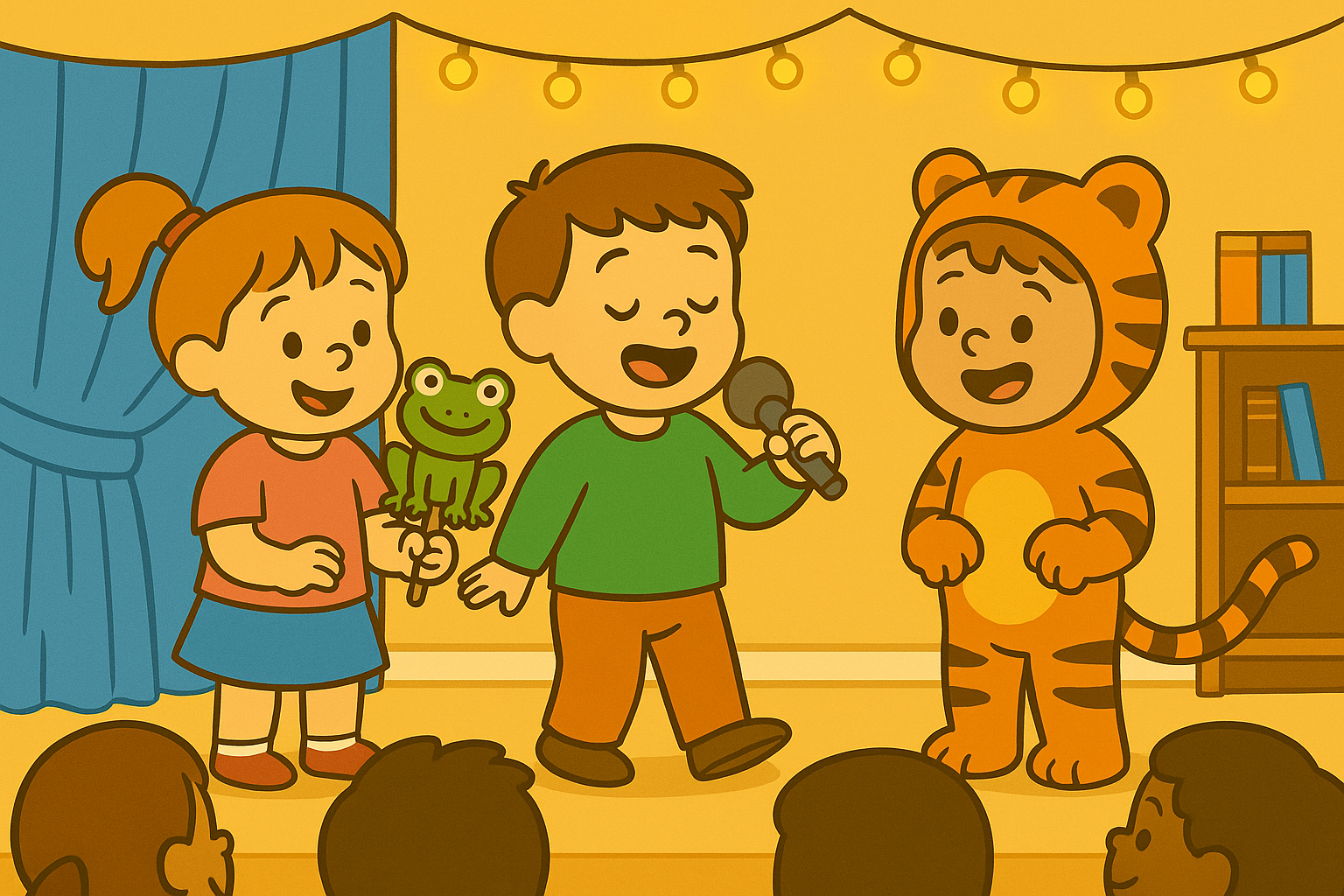
At home, a mini talent show doesn’t need bright lights or a stage—it just needs a safe space where children feel free to express themselves. Family talent shows encourage creativity, cooperation, courage, and laughter. They help children practice being seen without pressure and celebrated without comparison. The goal isn’t performance—it’s self-expression and joy.
A talent show doesn’t have to be complicated. It can be as simple as a few pretend tickets, a cozy “stage,” and some applause ready to go. What matters most is this: kids learn that every voice deserves to be heard.


Setting Up the Space
Before the show begins, create an environment that feels fun—and safe:
Use blankets or chairs to form a mini stage
Soft lighting or string lights add magic
Battery candle lights work for “stage lights”
Make a simple curtain with a sheet or scarf
Provide cushions for the audience
You can even assign roles: announcer, performer, audience member, helper. Rotating roles allows every child to find their comfort level. This mirrors the gentle flexibility found in Creative Indoor Play for Cold Winter Days.
Encouraging Many Types of Talents
Not every child wants to sing or dance—and that’s okay. Let them know that talent can look like:
Telling a funny joke
Magic tricks with toys
Showcasing a Lego creation
Acting out a puppet scene
Reciting a poem
Balancing objects
Doing a gentle yoga pose
Telling a short story they made up
Talent is not about skill level—it’s about sharing something that feels fun.
For Shy or Hesitant Performers
Some children may feel nervous. Reassure them with:
Puppets or stuffed animals to perform for them
Performing beside a parent or sibling
Having a “silent talent” (drawing, building, cooking)
Joining the audience instead—and celebrating others
Small steps count as participation. In fact, noticing fear and still trying at all represents true bravery, as seen in Helping Kids Handle Gift Disappointment Gracefully where emotional resilience is developed through gentle support.
Creating a Simple Show Order
Use paper slips or stickers to determine who goes first, second, or third. Children often love putting names into a bowl and drawing them. This adds a sense of ceremony and anticipation while removing pressure to “go first” or choose spots.
A small bell or clap pattern can announce each new performer with excitement. Remember—the tone is playful, never stressful.
The Power of the Host or Emcee
Let someone (adult or child) act as host. They might:
Introduce performers
Ask fun questions after each act
Lead applause
Say something positive about everyone
Hosting builds communication skills and keeps the mood light. A puppet—even a paper one—can serve as the emcee if this feels easier. This approach reflects the spirit of role-play found in Puppet Shows That Celebrate Acts of Kindness.
Making It Feel Special Without Pressure
Small touches can make the show feel magical:
Homemade “tickets” for the audience
DIY program sheets with performer names
Popcorn or fruit snack intermission
A post-show group photo
Complimentary stickers or paper medals
Honor courage—not perfection. Kids remember praise that feels specific and kind.
Celebrating Every Act
After each performance, try one of these prompts:
“What inspired your act?”
“What was your favorite part?”
“How did you feel during your performance?”
“What helped you feel brave?”
A few gentle questions make children feel seen—not judged. This supports emotional growth much like reflection strategies in Family Resolutions: Setting Simple, Meaningful Goals Together.
Building Bonds Through Participation
Siblings can team up for joint performances:
Puppet duos
Dance routines
Skits about everyday life
Lego storytelling scenes
Rhythm clapping games
Co-creation builds cooperation, laughter, and shared memories. Include parents, too—children love seeing grown-ups join in!
Ending With Gratitude
Close the show with quiet reflection:
“What did you enjoy tonight?”
“What did you like about someone else’s act?”
“Did you learn something about yourself?”
“What would you try next time?”
A short group hug or cheer can finalize the evening—leaving children with the belief that every voice matters.
A New Tradition of Confidence
A mini talent show isn’t about performance or perfection—it’s about helping children feel brave, seen, and supported by the people they love most. When kids are applauded for effort instead of outcome, confidence grows naturally.
The stage doesn’t have to be big. It just has to be safe.
And when children find their voice — they carry it with them into every season that follows.
This content is for educational purposes and is not a substitute for professional medical or psychological advice.