Encouraging Mindful Watching Over Passive Consumption
Encouraging Mindful Watching Over Passive Consumption
Why Passive Watching Has Become the Default
Passive watching rarely starts as a conscious choice. It grows out of convenience, habit, and exhaustion. Autoplay begins the next episode. A familiar show fills the silence. A video runs while kids eat, play, or wind down. Over time, screens shift from an activity into background presence.
The issue isn’t that kids watch shows. It’s that watching often happens without intention. When viewing becomes passive, children aren’t fully engaged — but their attention is still being occupied. That leaves less space for imagination, reflection, and connection.
Mindful watching doesn’t mean more rules or less fun. It means helping kids notice what they’re watching, why they’re watching it, and when they’re ready to stop.


Understanding the Difference Between Mindful and Passive Viewing
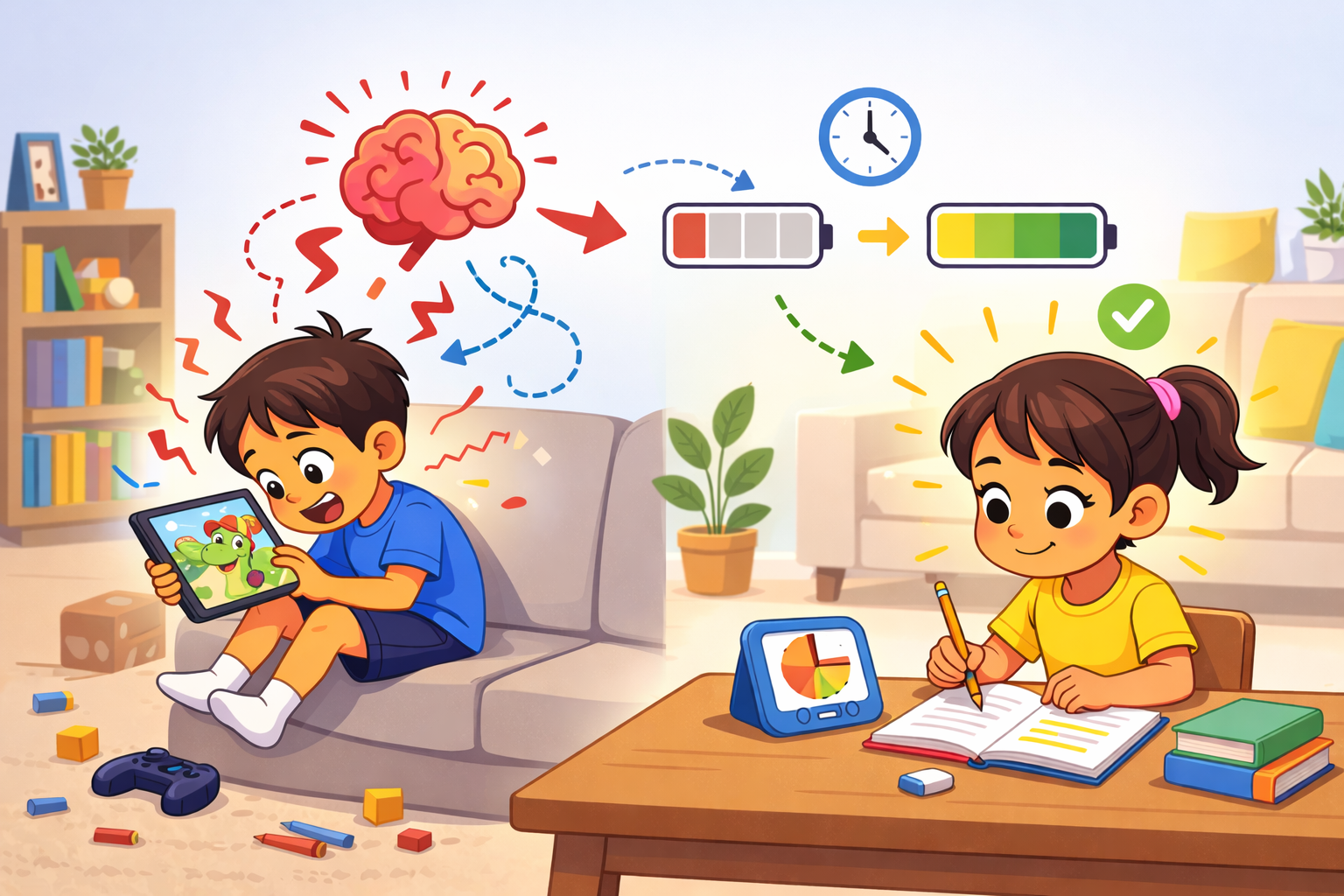
Mindful watching and passive consumption can look similar from the outside, but they feel very different internally.
Mindful watching usually:
Has a clear reason for starting
Involves attention and engagement
Has a natural stopping point
Leaves kids regulated afterward
Passive consumption, by contrast, often drifts. It begins automatically, stretches longer than intended, and ends with resistance or fatigue.
Helping kids recognize this difference builds awareness — the foundation of healthier screen habits.
Why Passive Consumption Is So Easy for Kids
Children are especially vulnerable to passive viewing because their brains are still developing self-regulation and impulse control. Digital platforms are designed to reduce friction and keep content flowing.
Passive watching is tempting because:
It requires no decision-making
It fills boredom instantly
It offers predictable stimulation
It delays transitions kids may want to avoid
This isn’t a discipline problem. It’s a design mismatch between developing brains and friction-free technology.
Why Mindful Watching Supports Focus and Emotional Regulation
When kids watch mindfully, their brains stay active instead of drifting. They follow stories, notice emotions, and process what they see.
Mindful watching supports:
Better attention control
Emotional awareness
Easier transitions away from screens
Stronger recall and comprehension
These benefits connect closely with ideas in The Hidden Impact of Background Screens on Focus, where intentional viewing protects attention far more than constant exposure.
Setting the Stage Before Screens Turn On
Mindful watching often begins before the screen is even on. A brief pause beforehand helps kids shift from impulse to intention.
Helpful pre-watch prompts include:
“What do you want to watch right now?”
“How long do you want to watch?”
“Are you watching to rest, learn, or have fun?”
These questions don’t need answers every time. Their purpose is to create awareness — not interrogation.
Choosing Content That Encourages Engagement
Some content naturally invites mindful watching more than others. Story-based, slower-paced programs often hold attention without overwhelming it.
Mindfulness-friendly content tends to:
Follow clear story arcs
Allow pauses between action
Focus on characters and emotions
Avoid constant visual noise
Watching Together Without Turning It Into a Lesson
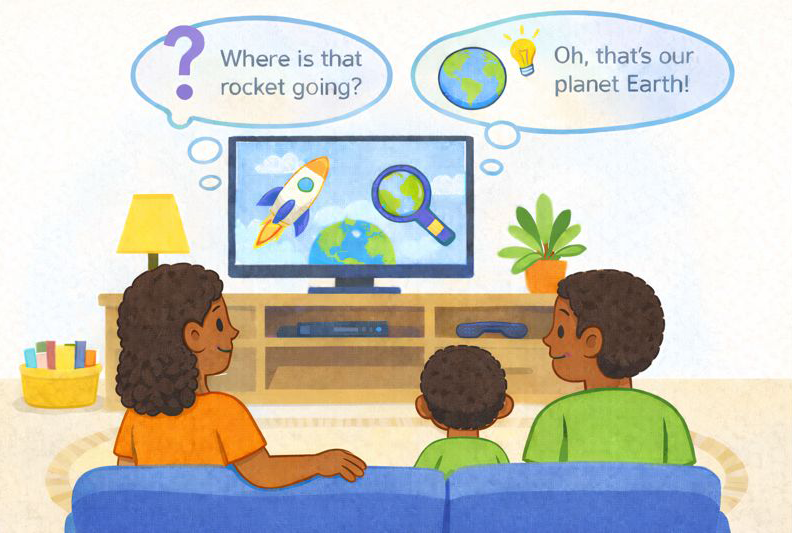
Co-viewing can support mindful watching — but only when it stays light. Kids don’t need commentary on every scene.
Effective co-viewing often looks like:
Sitting nearby rather than hovering
Laughing or reacting naturally
Asking one or two curious questions afterward
This approach reflects ideas in Why Co-Viewing Is Better Than Screen Policing, where shared presence builds awareness without control.
Helping Kids Notice When Watching Turns Passive
One of the most important mindful-watching skills is recognizing when engagement fades.
Signs viewing may be turning passive include:
Glazed-over expressions
Constant channel or video switching
Difficulty stopping when asked
Irritability afterward
Instead of scolding, parents can gently name what they see: “It looks like your body might be getting tired of watching.”
Creating Clear Endings Instead of Abrupt Stops
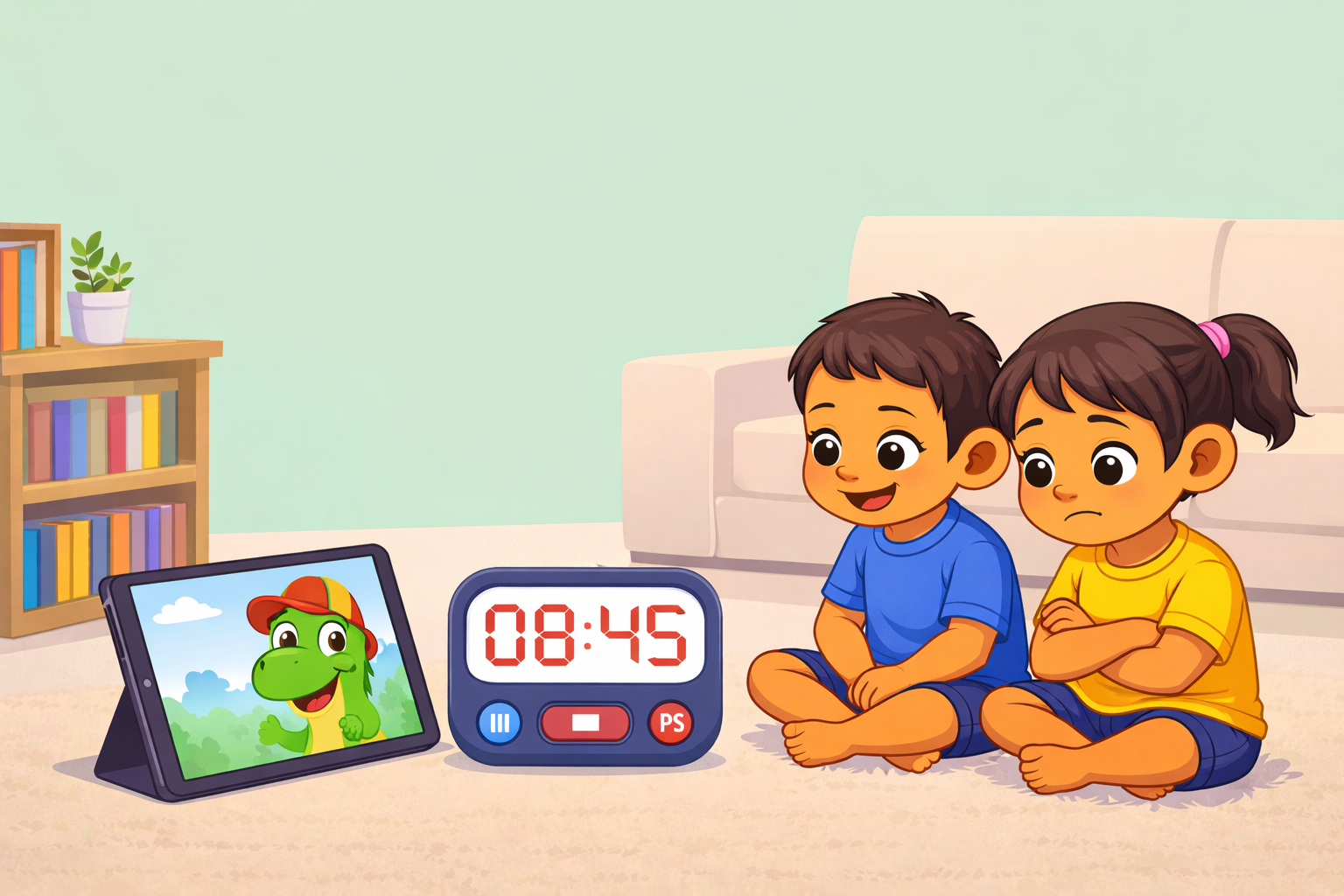
Mindful watching includes mindful stopping. Abrupt shut-offs often trigger conflict because kids haven’t emotionally disengaged yet.
Supportive endings include:
Finishing the episode or scene
Giving a brief heads-up before stopping
Pairing the end with a next activity
These transitions mirror strategies in Helping Kids Transition Away from Screens Peacefully, where predictability reduces emotional spikes.
Modeling Mindful Watching as Adults
Kids learn how to watch by watching adults. If screens are always on in the background or used absent-mindedly, kids absorb that pattern.
Mindful modeling can look like:
Turning the TV off when no one is watching
Saying why you’re choosing a show
Putting devices away after use
This everyday modeling reinforces values without lectures.
Shifting From Consumption to Awareness
The goal of mindful watching isn’t to reduce screen time at all costs. It’s to help kids stay present with what they’re consuming.
Families who focus on mindful watching often notice:
Less resistance when screens turn off
Fewer binge-watching patterns
More thoughtful content choices
Calmer post-screen behavior
Mindful watching isn’t about watching less. It’s about watching with intention.
This content is for educational purposes and is not a substitute for professional medical or psychological advice.