How to Recognize When Kids Are Overstimulated by Tech
How to Recognize When Kids Are Overstimulated by Tech
Why Overstimulation Is Often Missed
Technology overstimulation doesn’t always announce itself loudly. Many parents expect clear meltdowns or hyperactive behavior, but more often, overstimulation shows up subtly and builds over time. A child may appear calm while using a device, only to struggle with regulation later in the day.
Screens can temporarily mask dysregulation by holding attention tightly. When the stimulation stops, the nervous system finally reveals that it’s overloaded. This delay makes it easy to miss the connection between tech use and emotional or behavioral changes.
Recognizing overstimulation isn’t about labeling screens as harmful. It’s about learning to notice patterns early, so small adjustments can prevent bigger struggles later.


What “Overstimulation” Actually Means
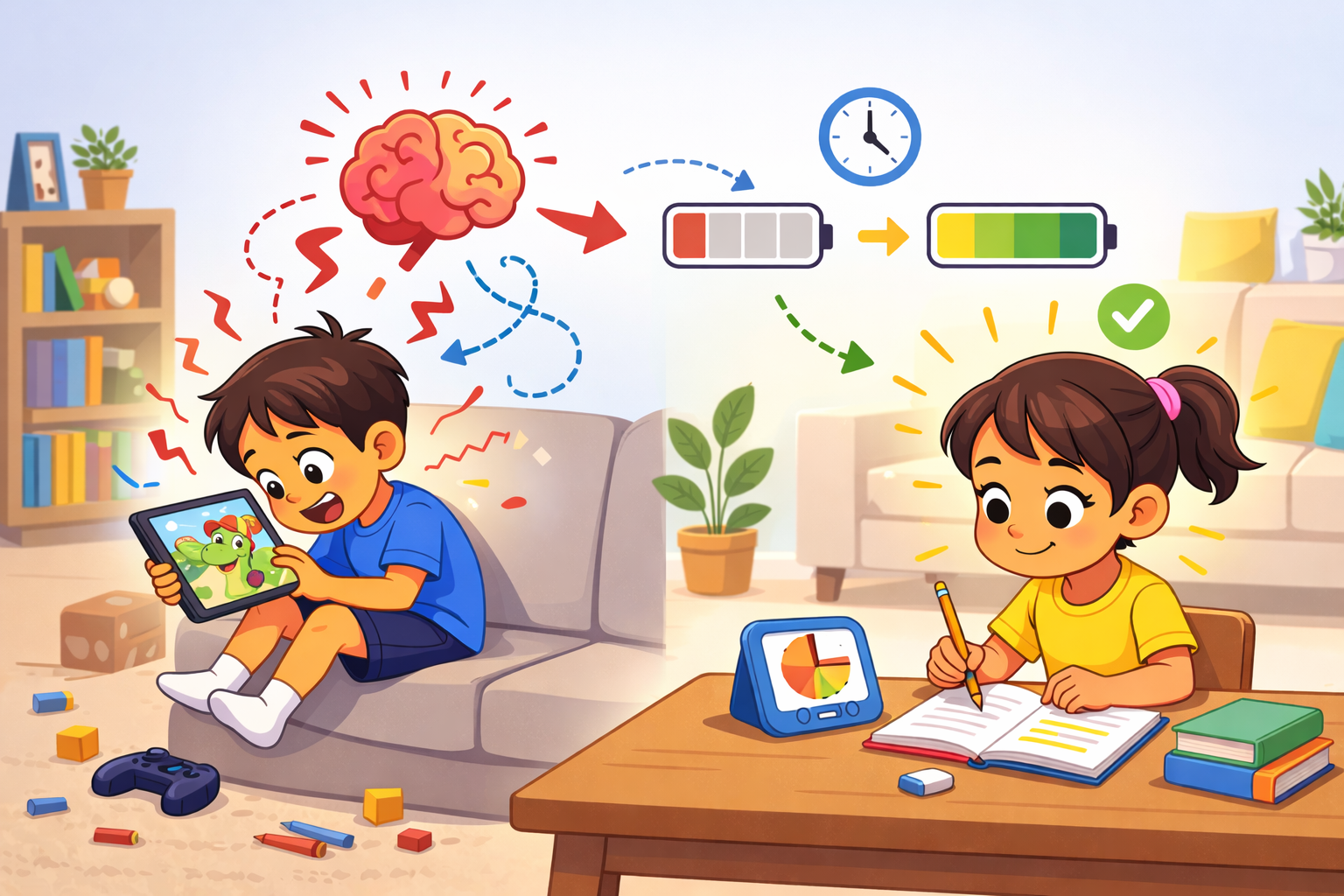
Overstimulation occurs when a child’s nervous system receives more sensory input than it can comfortably process or recover from. Technology often combines multiple high-intensity inputs at once.
Common sources of tech-related overstimulation include:
Rapid visual movement and scene changes
Bright, saturated colors
Continuous sound effects or music
Emotional intensity without pauses
When the brain doesn’t get enough recovery time, regulation becomes harder even after screens are turned off.
Why Kids Are More Sensitive Than Adults
Children’s brains are still developing the skills needed to filter input, regulate emotions, and shift attention smoothly. What feels manageable to an adult nervous system can overwhelm a child’s much faster.
Kids tend to be more sensitive because:
Their attention systems are still forming
They rely more on external regulation
They have fewer coping strategies
Transitions require more effort
This sensitivity doesn’t mean screens must be avoided — it means they must be used with awareness.
Early Emotional Signs of Tech Overstimulation
Emotional changes are often the earliest and clearest signals that technology may be overwhelming a child’s system.
Parents frequently notice:
Increased irritability or short tempers
Tearfulness that seems disproportionate
Big reactions to small frustrations
Difficulty calming once upset
These behaviors aren’t misbehavior. They’re signs that the nervous system may be overloaded and in need of support.
Behavioral Clues That Often Appear Later
Behavioral signs of overstimulation often show up after screen time ends, which is why they’re easy to misattribute to other causes.
Common post-screen behaviors include:
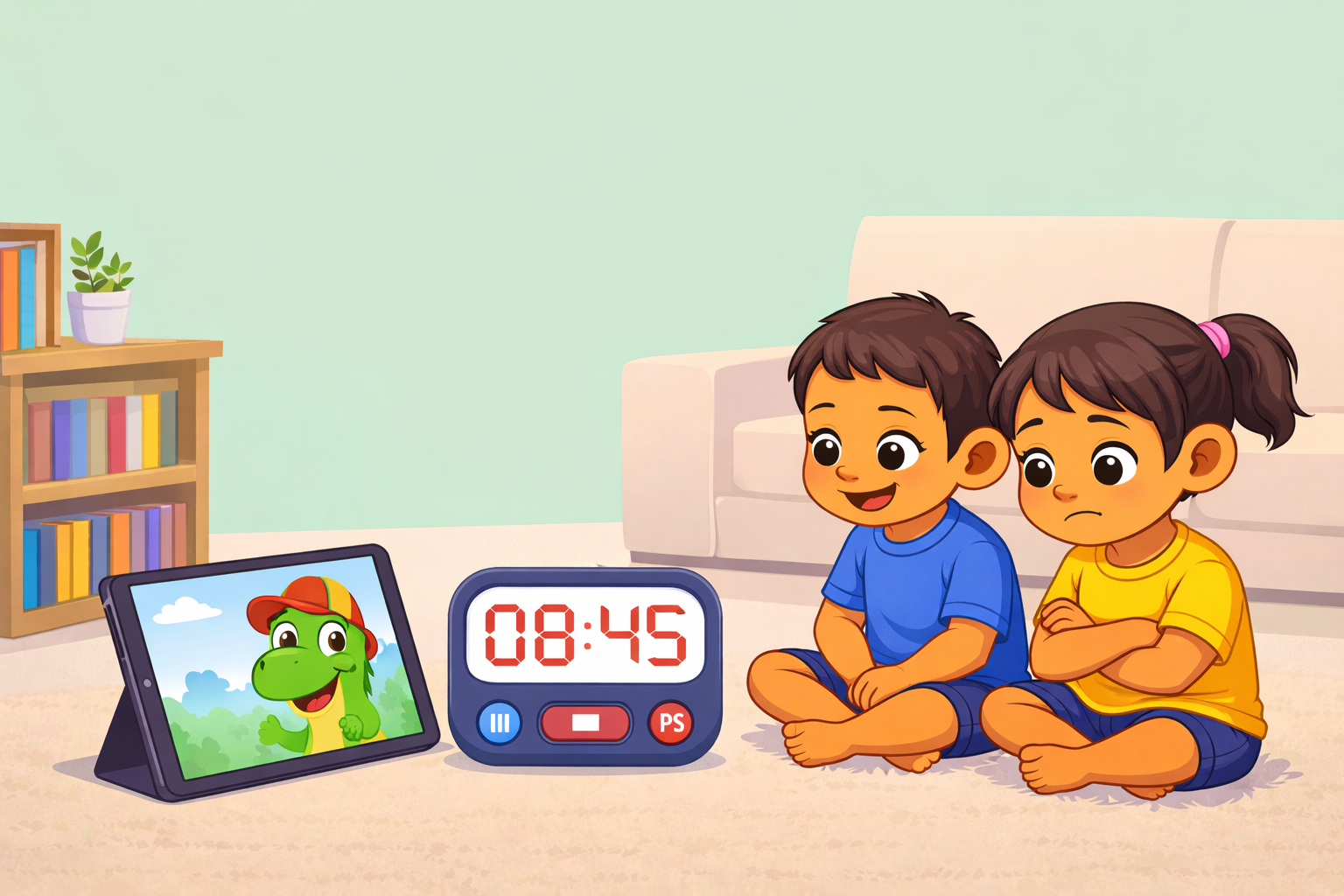
Strong resistance when screens turn off
Difficulty shifting to the next activity
Restlessness or pacing
Trouble engaging in independent play
These delayed effects align closely with patterns described in How to Recognize When Screen Time Becomes Overstimulation, where behavior reflects accumulated sensory load rather than immediate reaction.
Physical Signs Parents Don’t Always Connect to Screens
Overstimulation doesn’t just affect emotions and behavior — it can show up physically as well, especially in younger children who can’t articulate what they’re feeling.
Some physical cues include:
Headaches or eye rubbing
Fatigue paired with wired energy
Trouble settling the body
Disrupted sleep patterns
Because screens are often seen as calming, these physical signals are easy to overlook as unrelated.
How Content Type Matters as Much as Screen Time
Not all screen experiences affect kids the same way. Overstimulation is more closely tied to content intensity than to minutes alone.
Fast pacing, constant stimulation, and emotionally charged content place far greater demands on a child’s nervous system than slower, story-based media. A short burst of high-intensity content can be more overwhelming than a longer period of calm viewing.
This distinction is explored further in The Psychology of Screen Overstimulation, where intensity consistently outweighs duration as the key factor.
Why Transitions Become So Hard After Overstimulating Tech
When a child’s nervous system is overloaded, shifting from one state to another becomes much harder. Ending screen time can feel abrupt and disorienting.
Parents often observe:
Emotional crashes when screens end
Increased defiance or shutdown
Difficulty engaging in the next task
Using Environment to Reduce Overstimulation
Often, reducing overstimulation doesn’t require changing content — just changing the environment in which it’s used.
Helpful environmental adjustments include:
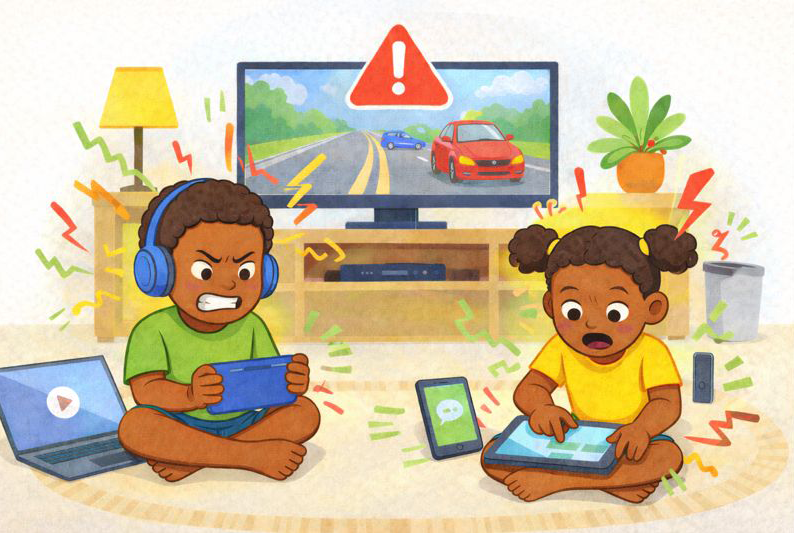
Turning off background screens
Watching in calmer, low-light spaces
Avoiding multitasking during viewing
These changes reflect principles from The Hidden Impact of Background Screens on Focus, where reducing visual noise supports regulation naturally.
What Helps Kids Recover From Overstimulation
Recovery is just as important as prevention. When kids have opportunities to reset, overstimulation doesn’t accumulate or spill into the rest of the day.
Quiet play, movement, time outdoors, music, or audiobooks all help the nervous system settle. These activities work because they lower sensory intensity while still offering engagement and comfort.
When recovery becomes part of the routine, kids build resilience rather than exhaustion.
Seeing Overstimulation as Information, Not Failure
Recognizing overstimulation isn’t about stricter rules or perfect limits. It’s about learning how your child responds to technology and adjusting with curiosity instead of blame.
Families who tune into these patterns often notice:
Easier transitions
Calmer emotional states
More flexible screen habits
Less conflict around tech
With awareness and small adjustments, screens can remain part of family life without overwhelming it.
This content is for educational purposes and is not a substitute for professional medical or psychological advice.