How to Create a Home “Media Zone” for Intentional Viewing
How to Create a Home “Media Zone” for Intentional Viewing
Why Environment Shapes Screen Habits More Than Rules
Most families focus on rules when managing screen time — how long, when, and what kids can watch. But the physical environment often has a much bigger influence than spoken limits. Where screens live in a home quietly shapes how often they’re used, how they’re experienced, and how easy they are to turn off.
When screens are scattered throughout the house, they become ambient. They slip into meals, play, and downtime without intention. A media zone brings screens back into focus as a deliberate activity rather than constant background presence. This reduces the need for daily enforcement because the space itself communicates expectations.


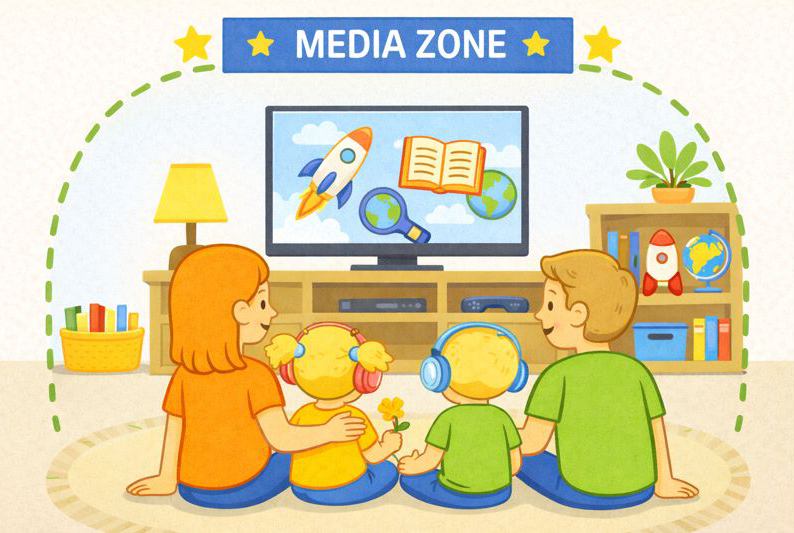
What a “Media Zone” Actually Is
A media zone is a dedicated place where screens are used intentionally rather than automatically. It gives technology a defined role instead of allowing it to spread into every corner of daily life.
A true media zone:
Has a specific physical location
Is used for planned viewing
Encourages shared or mindful use
Makes screens easier to both start and stop
This clarity helps kids understand that screens are something we choose, not something that just happens.
Why Centralizing Screens Reduces Overuse
When screens live in bedrooms, kitchens, and play spaces, they constantly compete for attention. Centralizing screens removes that ambient pull.
Families often notice:
Fewer impulsive screen sessions
Less background TV
Clearer transitions away from screens
This approach aligns closely with Creating Screen-Free Zones at Home, where environment quietly shapes habits without repeated reminders.
Choosing the Right Location for Your Media Zone
There is no single “perfect” media zone location. The best spot is one that supports presence and connection without making screens the center of family life.
Strong media zone locations usually:
Are in shared family areas
Avoid bedrooms when possible
Allow conversation during viewing
Stay out of chaotic, high-traffic paths
The goal is visibility and intentionality, not isolation.
Designing the Space to Support Intentional Viewing
Design choices matter more than families often realize. A media zone should invite focus rather than encourage zoning out.
Helpful design elements include:
Comfortable but upright seating
Soft lighting that reduces glare
Minimal visual clutter around the screen
No secondary screens nearby
These details subtly reinforce that viewing is purposeful, not passive.
Deciding What Belongs in the Media Zone
Media zones work best when families are clear about what the space is for. Not all screen use needs to happen there — but intentional viewing should.
Many families reserve media zones for:
Family movies or shows
Educational programs
Planned entertainment
Co-viewing experiences
This distinction supports ideas in Why Co-Viewing Is Better Than Screen Policing, where connection replaces constant control.
Why Media Zones Reduce Background Screen Use
One of the biggest benefits of a media zone is what stops happening. When screens are no longer everywhere, background use naturally fades.
Without a TV humming in the background, kids play longer. Conversations stretch out. Attention settles. The home feels quieter — not because it’s silent, but because visual noise is reduced.
This directly supports insights from The Hidden Impact of Background Screens on Focus, where even unnoticed screens fragment attention.
Setting Gentle Expectations Without Over-Rules
A media zone doesn’t require a long list of rules. Gentle expectations tied to the space itself are usually enough.
Common expectations include:
Screens are watched intentionally
Viewing ends when the show ends
Devices stay in the zone
Because these expectations are consistent and predictable, they feel less like control and more like shared understanding.
Making Transitions Away From Screens Easier
Stopping screen time is often where conflict arises. Media zones help because they give viewing a natural beginning and end.
They support transitions by:
Creating clear start/stop points
Separating screens from comfort spaces
Signaling that viewing is one activity among many
This mirrors principles in Helping Kids Transition Away from Screens Peacefully, where predictability lowers emotional resistance.
Adapting the Media Zone as Kids Grow
A media zone isn’t a permanent setup — it evolves as kids do. What works for preschoolers will look different for school-age kids and teens.
Over time, families may:
Shift from co-viewing to discussion
Adjust content expectations
Redesign the space for maturity
Revisiting the zone keeps it aligned with developmental needs rather than outdated rules.
Letting the Space Do the Work
The greatest strength of a media zone is how little active enforcement it requires. When screens have a home, many daily struggles simply disappear.
Families often notice:
Less negotiation around screens
More shared viewing moments
Fewer impulsive requests
Clearer media rhythms
This content is for educational purposes and is not a substitute for professional medical or psychological advice.