How to Limit Screen Time Without Power Struggles
How to Limit Screen Time Without Power Struggles

Why Screen Limits Turn Into Battles
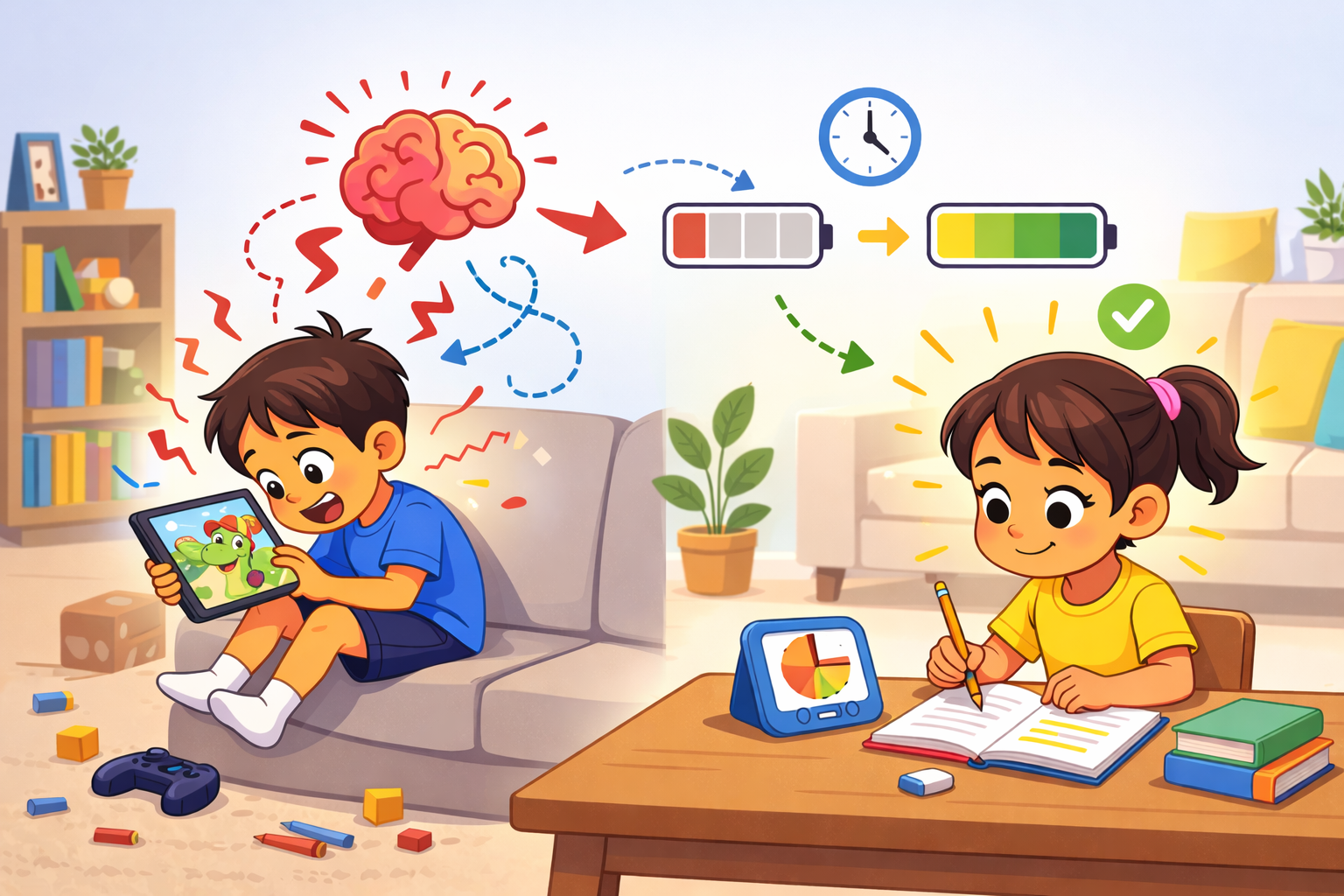
Most screen conflicts don’t start because kids love screens too much — they start because stopping feels sudden, confusing, or unfair. When limits appear unpredictably or change based on adult mood, children instinctively resist. The struggle becomes less about the screen and more about control.
Kids are wired to push back when they feel something is being taken away without warning or understanding. Parents, in turn, react to resistance by tightening rules. The cycle escalates quickly: request, refusal, consequence, frustration.
Limiting screen time without power struggles requires shifting the focus away from enforcement and toward predictability. When expectations feel stable and understandable, children spend less energy fighting and more energy adjusting.


Start With Rhythm Instead of Restriction
Children handle limits better when they are tied to daily rhythm rather than arbitrary numbers.
Rhythm-based limits might include:
Screens after school but before dinner
No screens before bedtime routines
Weekend morning viewing windows
When limits are predictable, kids don’t feel the need to negotiate them repeatedly.
Give Warnings That Actually Help
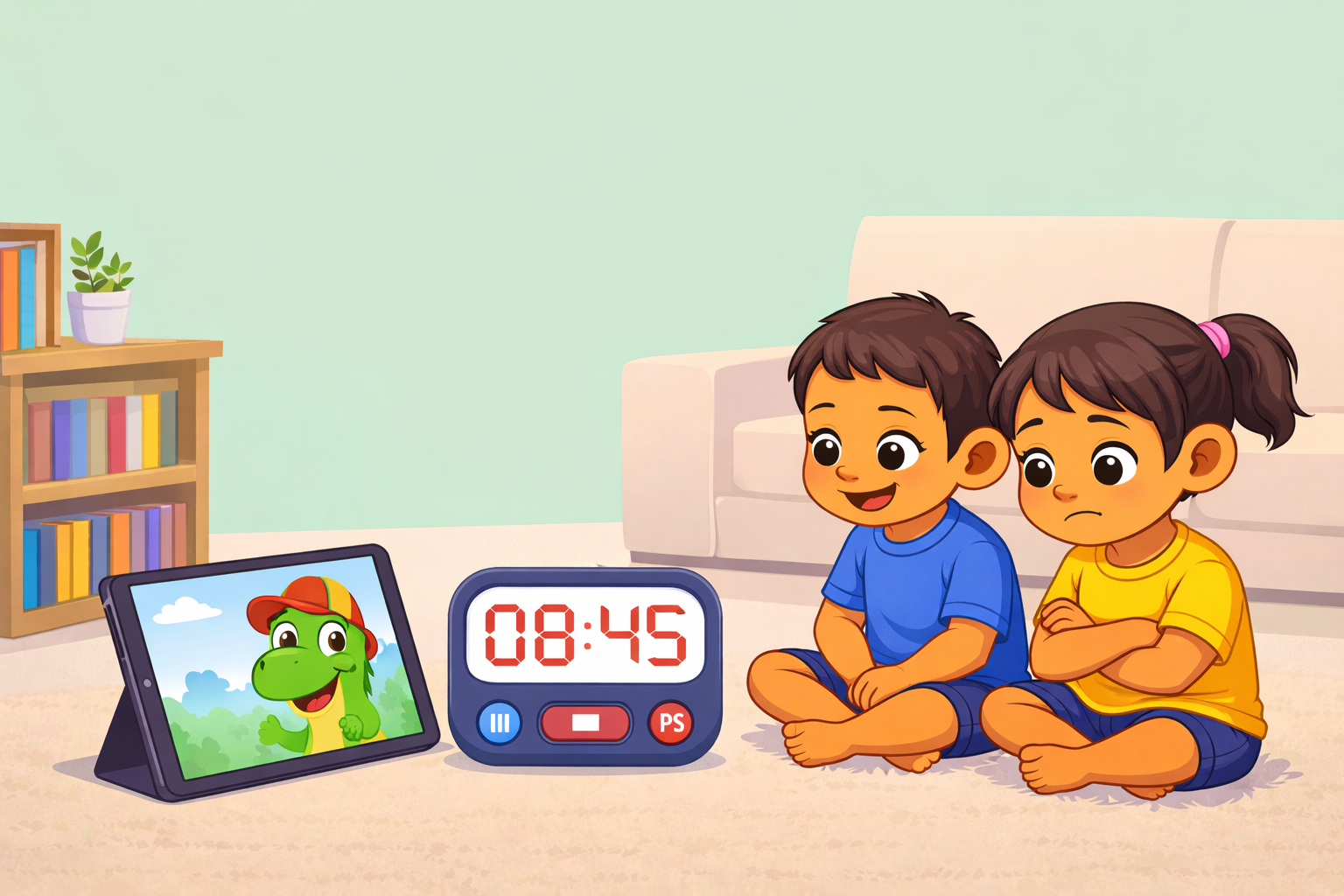
Warnings only work when they’re meaningful and consistent. Rapid countdowns rarely prevent conflict.
Effective warnings:
Happen early enough to process
Reference the next activity
Stay consistent day to day
These cues help children mentally transition instead of feeling abruptly interrupted.
Replace “Stop” With “Next”
Many struggles come from hearing a hard stop without knowing what follows.
Parents can reduce resistance by:
Naming the next activity clearly
Preparing materials ahead of time
Using routines instead of commands
This forward-focused language shifts attention away from loss and toward continuity.
Make Ending Screens Feel Predictable
Kids cooperate more when endings are built into the experience.
Predictable endings include:
Finishing an episode
Reaching a save point
Ending at a routine time
This approach supports Teaching Kids to Take Screen Breaks Naturally, where stopping feels logical rather than imposed.
Reduce Negotiation Opportunities
Repeated negotiation fuels power struggles. Calm consistency reduces them.
Parents can minimize negotiation by:
Avoiding mid-session rule changes
Keeping expectations simple
Not debating during transitions
Consistency often matters more than strictness.
Let Kids Experience Success at Stopping
Children need to practice stopping successfully — not just be stopped. Small wins build cooperation over time.
When kids stop and the environment stays calm, they learn that transitions are manageable. Confidence grows, and resistance fades naturally.
This builds internal regulation rather than external compliance.
Offer Choices Within Boundaries
Choice reduces defensiveness while preserving structure.
Helpful bounded choices include:
Which episode to watch
Whether to stop now or in five minutes
What to do after screens
Choice gives kids agency without removing limits.
Model Calm Limits as an Adult
Children read emotional tone more than words. Calm delivery matters more than perfect phrasing.
Parents can model calm limits by:
Speaking slowly and neutrally
Avoiding repeated explanations
Following through gently
This modeling reflects How to Model Mindful Tech Behavior as Parents, where behavior teaches cooperation.
Focus on Relationship Over Enforcement
Power struggles shrink when connection grows. Kids cooperate more with people they feel connected to.
Parents can support connection by:
Joining briefly before ending
Acknowledging enjoyment
Staying present after screens end
This reinforces ideas from The Importance of Shared Media Experiences, where relationship lowers resistance.
Building Limits Kids Eventually Own
The goal isn’t perfect compliance — it’s helping kids internalize boundaries. Over time, consistent, respectful limits become familiar and predictable.
Families who focus on calm structure often notice:
Fewer emotional endings
Faster transitions
Kids reminding themselves of limits
This content is for educational purposes and is not a substitute for professional medical or psychological advice.