How to Encourage Offline Hobbies
How to Encourage Offline Hobbies
Why Kids Gravitate Toward Screens Instead of Hobbies
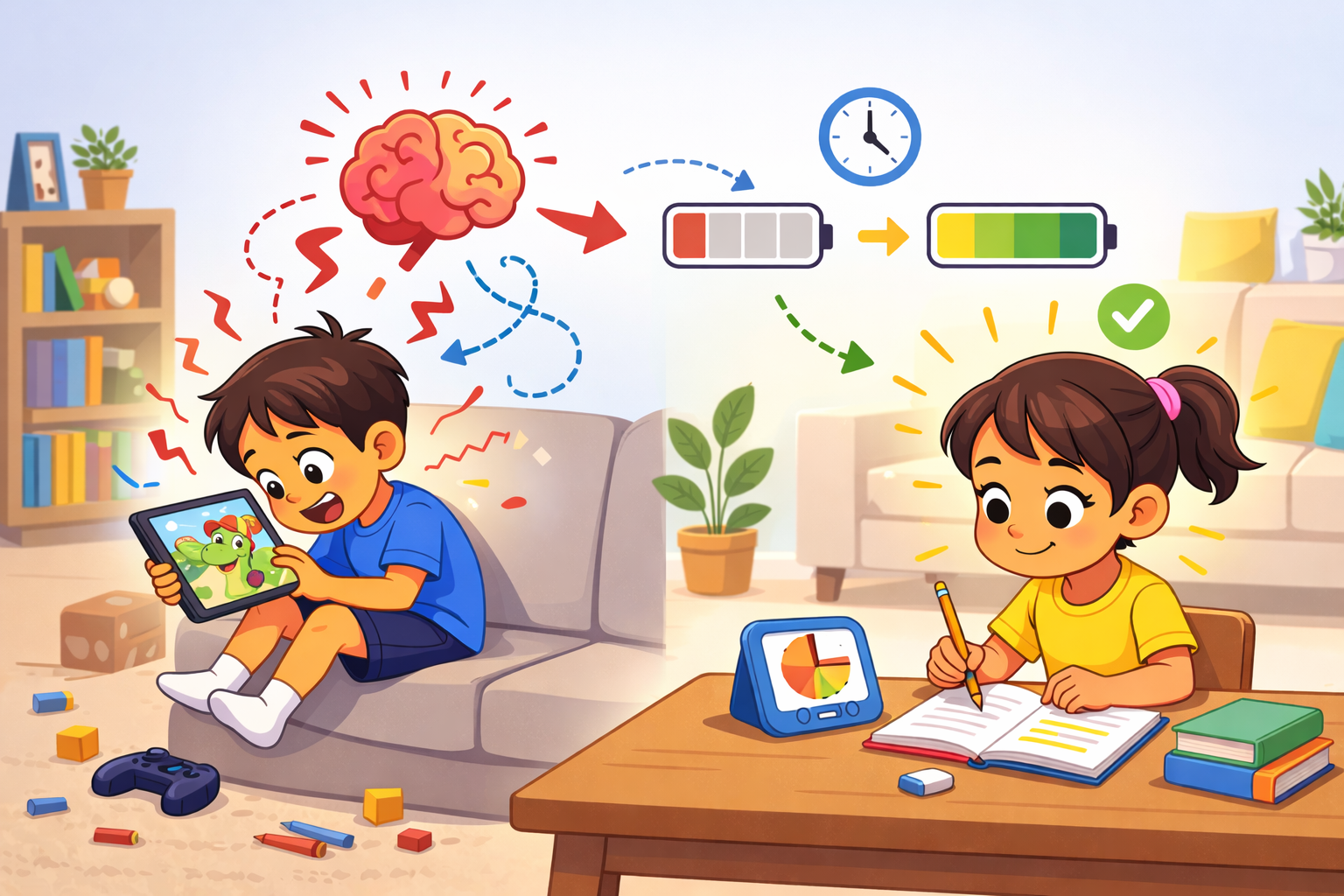
Screens aren’t popular with kids by accident. They’re immediate, structured, and predictable. A child never has to wonder what to do next — the activity is already designed for them. Offline hobbies ask something different. They require initiation, patience, and sometimes uncertainty.
When kids default to screens, it doesn’t mean they lack creativity or motivation. It usually means they’re choosing the path that feels easiest to enter. Offline hobbies feel harder at the start because they depend on imagination and decision-making instead of instant feedback.
Encouraging offline hobbies isn’t about removing screens until kids become creative. It’s about lowering the barrier to getting started so the first step feels possible.


Understanding the “Activation Energy” Problem
Many hobbies fail not because kids dislike them, but because starting feels overwhelming.
Children may hesitate because:
They don’t know what to do first
They fear doing it “wrong”
Materials feel complicated
Screens feel simpler
Reducing this activation energy makes hobbies more inviting than entertainment.
Creating an Environment That Invites Doing
Kids engage with what they see and can reach easily.
Helpful environment changes include:
Keeping materials visible
Storing projects partially started
Limiting setup steps
When hobbies are easier to begin than screens, participation rises naturally.
Letting Hobbies Be Short and Flexible
Many children resist hobbies because they imagine long commitment. Small windows of engagement feel safer.
Parents can encourage hobbies by:
Allowing 5–10 minute participation
Stopping before frustration
Returning later instead of finishing
This flexibility aligns with Teaching Kids to Take Screen Breaks Naturally, where short shifts build long-term habits.
Connecting Hobbies to Existing Interests
Kids rarely start hobbies from nothing. They build them from what they already enjoy.
Parents can bridge interests by:
Turning favorite shows into drawing prompts
Building with themes they love
Acting out stories physically
This mirrors Using Technology for Family Creativity (Music, Photos, Videos), where inspiration moves from screen to creation.
Reducing Pressure to Be Skilled
Performance pressure quietly kills hobbies. Kids abandon activities when outcomes matter more than experience.
To lower pressure:
Avoid correcting early attempts
Celebrate effort instead of results
Treat hobbies as exploration
Confidence grows when kids feel free to experiment.
Joining Briefly, Then Stepping Back
Children often need help entering an activity — not staying in it. Adult presence at the start can unlock independence.
A short moment of participation signals safety and interest. Once momentum builds, stepping away lets ownership take hold. Over time, kids initiate hobbies without prompting.
Creating Predictable Hobby Windows
Routine removes decision fatigue. Kids engage more when they expect creative time.
Families might:
Schedule quiet afternoon hobby periods
Pair hobbies with certain days
Build them into transitions
These routines support How to Limit Screen Time Without Power Struggles, where structure replaces negotiation.
Supporting Boredom Instead of Fixing It
Boredom is often the doorway to hobbies. When adults solve it immediately, kids don’t practice initiating.
Parents can:
Pause before offering solutions
Reflect feelings instead of distracting
Wait while kids think
This builds self-directed engagement over time.
Modeling Real Interests as Adults
Kids notice what adults genuinely enjoy. When parents pursue hobbies, children see activity as normal, not assigned.
Helpful modeling includes:
Reading or crafting nearby
Talking about personal projects
Choosing offline time intentionally
This reflects How to Model Mindful Tech Behavior as Parents, where behavior shapes habits.
Helping Kids Discover What They Enjoy
The goal isn’t to fill every moment with structured activity — it’s to help kids discover satisfaction outside constant entertainment.
Families who support offline hobbies often notice:
Longer independent play
Less reliance on screens for stimulation
Increased confidence
This content is for educational purposes and is not a substitute for professional medical or psychological advice.